education, Princess, Raves, Suburban, Teacher

Cheers, fellow teachers! It’s World Teacher Day! Time to start celebrating, non?

writing134Oct 5 is World Teacher Day! What are you doing to celebrate?

I started celebrating today at precisely wine-o’clock. (Cheers, Me!) I’ve been in this profession (off and on) for more than 20 years, so I figure I’ve earned a few pops, as Don Cherry would say.

Teaching is a wonderful, fun-filled, amazing career BUT if you aren’t careful, it can drive you crazy.

Two years ago, I let it drive me completely and absolutely bonkers. My long trip back from Bonkersville took me more than a year to complete, but I came back with a brand new perspective.

Teaching is a job and you need to do it to the best to the best of your ability. You have kids who depend on you and parents who trust you with their most beloved little person. But in the end it’s a job and you can’t let it run or ruin your LIFE.

So, how can you be the best teacher you can be without going bonkers?

1. Do your job. Sounds simple doesn’t it? But sometimes it isn’t. We get bogged down in paperwork and standardized tests and we forget the real reason we are there…to teach kids. So, Priority #1 everyday: teach kids. Priority#2: everything else.

2. Accept the fact that you can’t do everything, for everyone, every day. It’s called being human.

3. Take comfort in the reality that you can be replaced. Yes…comfort. Once I realized that the world of school continued to spin perfectly fine without me, I felt like a load had been lifted off my shoulders. It was liberating to know that, yes, I made a difference but no, the world would not stop spinning if I stepped off for a day or a year.

This is my mantra. As teachers, we can't fix everything so we have decide what we can do and what we have to let go. It's the wisdom part that gets me all the time.
This is my mantra. As teachers, we can’t fix everything so we have decide what we can do and what we have to let go. It’s the wisdom part that gets me all the time.

4. Understand that you don’t have to teach everything or fix everything in one year. There are a lot of people in the system who will help your students over the years. It’s not your sole responsibility. I’ve taught or worked with almost every grade (including university students) and one thing every grade level teacher has in common is this belief that if “I don’t do it now, next year’s teacher won’t do it and little Johnny will be screwed.” Let me put your mind at ease. All (good) teachers, at every grade (including college and university) want what’s best for students. They will be OK.

5. During the school day, shut your door – physically and metaphorically – and focus on the students inside your room. They are your priority. (If you have trouble with this one, see #1.)

6. Teach students subjects. Don’t teach subjects to students. Know your students as well as your subject and I guarantee you will have a successful year. I love the fact that my son’s math teacher is a freaking math genius, but I also love the fact that she can relate to her students and make them feel like they can do anything. That’s a win-win.

7. Take care of your health. Eat right, exercise, get your sleep. You can’t do those things if you are working all the time.

8. If you do get sick, take a sick day. Seriously…no one admires the teacher who shows up with the flu and spreads flu bugs throughout the school. Hear me now: you aren’t that important! There are subs who can keep the world of school of spinning while you recover from the mumps. And don’t forget: your health includes your mental health, too. No one likes the crazy, cranky teacher. The occasional mental health day may be the thing that keeps your career on track.

9. If your classes are anything like the ones I see, you could literally work 24-hours a day and still not meet the needs of every child, every day. Do your best and then shut it down. Make sure you have a life outside of school. (see #7)

10. Enjoy it. Yes, class sizes are often too big and curriculums change and sometimes things just don’t make sense. But kids are worth it. Being able to watch children learn and grow every day is an amazing gift. Enjoy it.

writing133

Note: This pithy advice applies to teachers like myself who experience first world problems. Teachers who work in third world countries, war zones, or in areas of extreme poverty are, in my humble opinion, teacher-saint hybrids who have my amazed admiration.
education, Teacher

There’s A New Kid in Town. Be nice.

It sucks being the new kid – even when you’re not a kid anymore.

writing128At my old school, I could walk into the staff room anytime of day and no matter who was in there, I knew them, I liked them, and I felt comfortable talking to them.

My classroom was set up just the way I liked it.

I knew where all of the office supplies were stored and were the good things were hidden.

The school secretary was my BFF.

I knew when to approach the principal for something and when to turn tail and try again another day.

After 5 years, I belonged.

Until I didn’t anymore. And I had to get a new job.

After spending almost 10 years in the elementary school system, I switched gears and took a new position as a resource teacher at a different school – a middle school – grades 6-9.

I knew that I would know most of the kids because my new school is the feeder school for my old school. They are literally within walking distance of each other. But it was new and it was different and it wasn’t my old school.

My first day, I was lost. I didn’t know where anything was and I didn’t know who to ask. I recognized my fellow newbies by their vacant zombie stares and the way they reached out and grabbed at people, begging desperately, “Help me! I can’t find the photocopier!”

By lunchtime, I was questioning my decision to return to the teaching world altogether.

I was just about to reserve a table for one for my full-fledged pity party, when I walked into the cafeteria.

It was the first lunch for the new group of grade 6 students and they were all trying to figure out where to sit in their new cafeteria.

Last year, in elementary school, they all had assigned seating. You may not have liked the kid who ate beside you, but at least you had a place to sit.

Now, it was a free-for-all.

Some rushed to find a spot next to their friends, while others just stood there, scanning the room.

I watched for a few minutes. I said hi to a few kids I had taught in previous years and then I made a beeline for a little girl I saw sitting alone. Since I didn’t recognize her from my old school, I was pretty sure she had just moved to our area.

“Hi there,” I said, sitting down across from her. “My name’s Mrs. Hollis. What’s your name?”

She barely raised her head. “Sarah.”

“Hi Sarah. Are you new here, Sarah?”

(whisper) “Yes.”

“Where did you move from?” I asked, trying to gently get her to open up.

Turns out “Sarah” had just moved to our area from California. She didn’t know anyone and when the lunch bell rang, she had no idea where she was going to go or who she was going to sit with. So she chose to sit as far away as possible from everyone. She looked like she wanted to crawl inside her own skin and disappear.

I talked to her for a little bit and then introduced her to a few students I knew at her table. I tried to start a conversation between them before moving on.

Next I found a foreign exchange student standing alone in the middle of the cafeteria. She was clutching her lunch bag to her chest in the same way my grandmother used to hold her purse at the mall – as if she was trying to protect it from potential muggers.

This little girl’s English was poor and her voice was barely a whisper but I managed to figure out that she had had trouble opening her locker which made her late for lunch. She didn’t know where she was supposed to go and no one was jumping up inviting her to join them. I quickly paired her up with a few kids I had taught a few years back that I knew would be nice to her and kept moving.

Now, I realize these kids are not in Kansas anymore. They are travelling the mean streets of middle school now. But this shouldn’t have happened.

New kids need support systems in place the first day of school. They need to know that when they go to lunch on that first day, they won’t have to stand there, scanning the crowded tables, desperately trying to figure out whether it’s better to approach an already formed group and risk rejection or eat alone.

It’s difficult as an adult to feel out-of-place in an unfamiliar situation or with an unfamiliar group but it is gut wrenching for a child.

The most important thing for all of us as human beings is to feel as if we belong.

If you don’t feel that you belong in the place where you spend the majority of your time, chances are you will be stressed, anxious and unhappy. And when you are stressed, anxious and unhappy bad things happen. Eating disorders, depression, anger, and a whole host of other things that children shouldn’t have to go through.

Schools need to do a better job of helping everyone feel as if they belong.

New kids transferring into a school should be assigned a buddy, someone who is confident and familiar with the school. Someone who will show them which bathroom is closest to the class and which water fountain only spits out warm water. They need someone to sit next to during lunch that they know won’t make fun of them.

Today was Pink Day. It’s the day when students and staff wear pink to show that they are against bullying. This is a great initiative. But do you know what protects kids most from becoming victims of bullying? Having  friends. Even one good friend lowers your risk. Bullies target kids who are alone because they are easy marks. If you have a friend, even one, you are safer, happier, and more successful.

So when you see a child who is always, repeatedly, unhappily, alone, say something, do something, help.

writing34

It could make all the difference in the world.

education, Teacher, Uncategorized

Report cards – Who are we writing them for?

In response to a request for feedback put forth by Nova Scotia’s Minister of Education, I wrote the following letter which I forwarded today.

writing117Dear Minister Jennex,

In a recent letter to The Chronicle Herald, you invited families, students and educators to offer feedback on the report card system.

In my experience, teachers are often extremely reluctant to speak publicly on matters of education for fear of being seen as insubordinate or disrespectful. They often worry that speaking out will affect their current teaching position or their future job prospects. This fear silences teachers and keeps valuable information from being shared.

As an active teacher currently working in the Nova Scotia school system, I am taking you at your word that my feedback will be accepted in the manner in which it was requested. I expect that you will consider my comments to be neither disrespectful nor insubordinate. My only intent is to pass along my experience with the current report card system with the hopes that this ‘insider information’ will help to improve the current system.

My concern is that there appears to be a disconnect between what is being said and what is being done.

In your letter, you stated:

Comments on report cards should provide clear, straightforward information to parents about how their child is achieving and progressing in relation to program expectations and learning outcomes.

The HRSB policy on assessment states that report cards must be written: “using language that is based on learning outcomes and is easily understood by parents/guardians.” 

What we have here is an oxymoron.

To ensure report cards are easily understood by all parents/guardians, we need to use clear and straight-forward language. But, when we must deal exclusively with learning outcomes, we are forced to use eduspeak.

It is extremely difficult, if not impossible, to do both at the same time and have anyone, other than other trained educators, understand what you ‘really’ mean.

In your letter you also stated:

It is important for families to know that teachers are expected to produce individual report cards for students. The idea that they must use only “canned” comments is not true. Teachers are encouraged to include personalized comments.

While I don’t presume to speak for all teachers, the ones I know, myself included, have not been encouraged to include personalized comments. In fact, most personalized comments have been discouraged and crossed out by administrators only to be replaced by general outcomes-based language.   

As a former teacher, I know you are aware that teachers spend hundreds of hours writing report cards every year. And while it is true that we are not given “canned comments”, it is true that we have been specifically told by our administrators what we may and may not include in these comments.  Over the years, this list of what is permissible to say has been whittled down to such a narrow point that often all that is left is what you might call a ‘canned’ comment.

All Nova Scotia schools (as far as I am aware) require teachers to submit their report cards to be proofread and edited by an administrator before they are sent home. This helps to pick up on most of the inevitable typos that occur when you type 100+ pages of reports, but it also ensures that all comments are outcomes-based and do not include any information that strays from this focus.

HRSB policy states that teachers are required to develop accurate report cards by always relating grading and reporting to the learning outcomes and excluding characteristics that are not linked to learning outcomes (such as effort, behaviour and attendance). 

As well, individual student achievement will be measured against defined curriculum outcomes rather than compared to other students or measures of individual academic growth (and is) not be based on measures such as students’ social development and work habits, bonus points, student absence, missed/late assignments, group scores, neatness.

How is a teacher supposed to personalize a comment for a student when all personal information has to be excluded?  Once again, we have ourselves a paradox.

There are many different ways for teachers to communicate with parents outside of report cards. As we used to say at my school, “No parent should ever be surprised by what they read on a report card.” Yes, we send home completed tests and projects and samples of work, we write newsletters, we make appointments to meet with parents and we call them when specific issues arise. We also have board scheduled parent-teacher interview times. Unfortunately, in the HRSB at least, parent-teacher interviews are no longer scheduled to follow the issuance of report cards. Any parent who is confused by their child’s report card must make a separate appointment to meet with or speak to their child’s teacher. For a variety of reasons, not all parents are able or willing to do this. Many of them rely on their child’s report card to be self-explanatory, as they should be.

In the end, it’s simple.

Parents want to know how their child is doing in school. They want to know what their child is good at and what they struggle with both academically and socially. They want to ensure that their child is a happy, independent learner. They want what’s best for their child. And students, even the little ones, want to know when they’ve done well and how they can do better.

We need to improve our current report card system so that parents and students understand what we are saying. Otherwise, what is the point of having report cards at all?

writing118

education, Memoir, Princess, Rants, Raves, Suburban, Teacher

Homework vs. Laundry: One of these things will teach your child self-discipline, responsibility and time-management. The other involves worksheets.

writing114As an elementary school teacher, I rarely assign homework.
Of course I encourage my students to read. I also encourage them to follow the news, eat right, and be kind to their friends and family.

But nightly math sheets and fill-in-the-blank grammar exercises?

Nope.

I’ve studied the research, read the books, watched the kids, and talked to the parents. I’ve raised two boys to teenagehood and I was in school for almost half my life. And I know, in my gut and in my brain, that regular, daily homework for homework’s sake is at best, unnecessary, and at worst, detrimental to children’s learning.

Go ahead.

You can start the shrieking and the hand-wringing now. I’ll wait. I’ve taken more flak for my decision to not (regularly) assign homework than I have for just about anything else in my career (except my smart mouth, but that gets me in trouble everywhere I go).

The myths that surround the benefits of homework have been around for so long, most of us just assume it’s a necessary evil.

But it’s not.

Now, I know what you’re saying.

Reader: OK, Heather, let’s say that I believe you (which I don’t) when you say the research shows that homework makes little or no difference in terms of academic success, especially at the elementary school level, but what about the non-academic benefits?

Me: Like what?

Reader: Well, you know, homework teaches kids responsibility and time management and self-discipline. That stuff is important!

Me: I agree. Those things are important. But does homework really teach those things? Can you show me a study that proves that to be true? How many 7-year-olds do you know who come home from school and pull out their homework and say, “Gee Mommy. I have to finish this math worksheet and colour in this photocopied picture of an apple without going outside the lines before school starts again tomorrow. Let me see, how much time will I need? I guess I’ll have my snack now and then I’ll go outside and play for 30 minutes. That will leave me with enough time to colour in the apple while you’re making dinner. Then I might watch a little TV for no more than 45 minutes because I need to leave myself lots of time to work on this math because I really don’t understand it.”

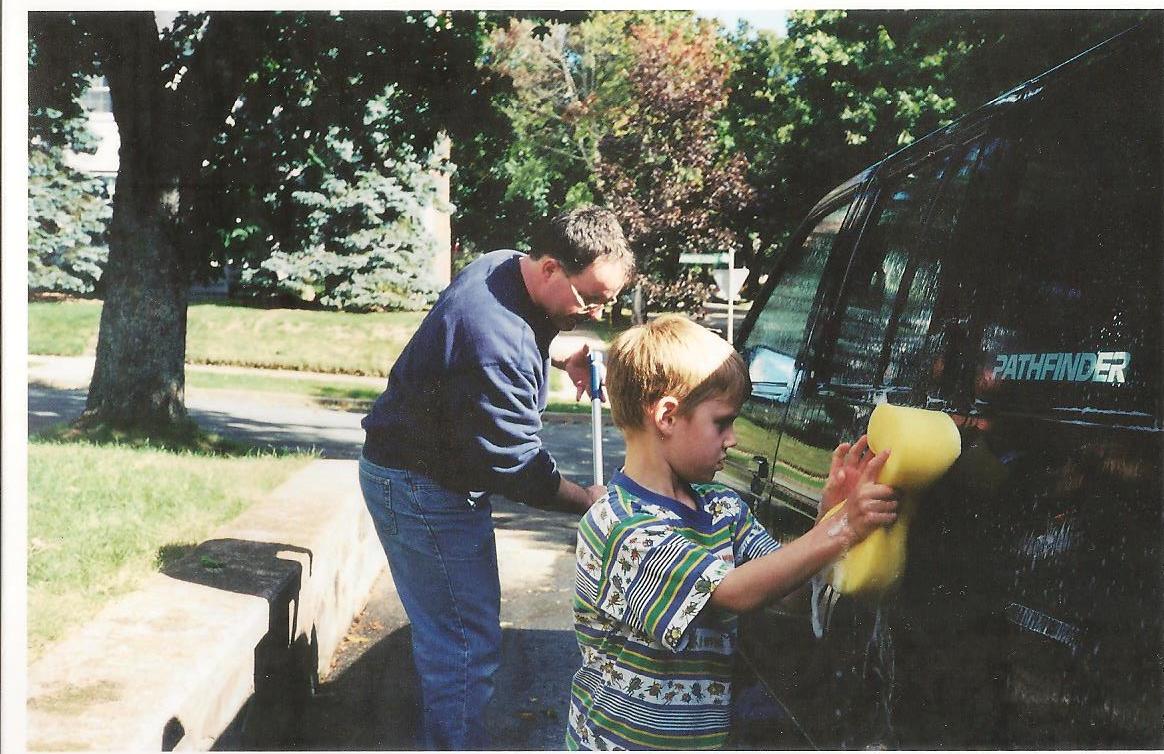
Washing the car - maybe the funnest chore, ever!
Washing the car – maybe the funnest chore, ever!

Let’s be honest here.

When homework comes home, the only person who has to cram more responsibility, time-management and self-discipline into their already crazy day is the parent or guardian of the youngster with the homework.

So, how DO we teach important things like those noted above?

One word: laundry.

Yup. Laundry.

Now, this means that the job of teaching responsibility, time-management, and self-discipline outside of school hours has to be taken out of the hands of teachers and placed into the hands of parents and guardians.

I know. Now I’m talking crazy talk.

“But you’re the teacher! It’s your job!” I can hear you screaming.

Yes, I’m the teacher. And when your child is in school, I will do everything I can to teach them all sorts of things, both academic and non. But, I can’t follow my students home.

And home is where these incredibly important lessons need to be taught.

Household chores (unlike homework) have been proven to instill in children all of those great non-academic life lessons that help nurture and grow our children into responsible adults.

“Using measures of an individual’s success such as completion of education, getting started on a career path, IQ, relationships with family and friends, and not using drugs, and examining a child’s involvement in household tasks at all three earlier time, Rossmann determined that the best predictor of young adults’ success in their mid-20s was that they participated in household tasks when they were three or four. However, if they did not begin participating until they were 15 or 16, the participation backfired and those subjects were less “successful.” The assumption is that responsibility learned via household tasks is best when learned young.” http://www.cehd.umn.edu/research/highlights/Rossmann/

Children who feel like they are contributing members of their community are more likely to feel like they belong.

I am not suggesting we send our children back down into the mines on the backs of old ponies to dig for coal. I am suggesting that they do age-appropriate tasks that allow them to feel like they are contributing to making life better.

Children are not pets or pieces of furniture or even guests. They are a valuable part of the family unit. They BELONG.

 I chose laundry as an example but any chore will do. (Don’t panic. You can ease into it. I’m not expecting your child to be running a laundromat out of your home at age 11.)

Children as young as 3 can be taught how to put their dirty clothes in the laundry hamper instead of throwing them on their floor.

By the time that child reaches elementary school, he or she can sort the laundry into whites and colours and help mom or dad carry it to the washing machine. They can also put their clean clothes away in the drawers.

Then you can add folding or hanging up their own clothes. (This one is scary because children rarely fold their clothes in a way grown-ups consider acceptable. That’s OK. If they don’t like wearing wrinkle clothes, they will do it differently next time.)

You want to teach a teenager about time-management? Let them do their own laundry. They will soon discover that if they want to wear that dirty shirt and those jeans to the dance, they need to do their laundry at least the night before so everything will have a chance to dry.

You want to teach a child about self-discipline? Let them do their own laundry. They will learn that instead of playing video games non-stop for 3 hours, they need to keep an eye on the washer, so they can move one load to the dryer and get another one in.

You want to teach a pre-teen about responsibility? Let them do their own laundry. They will learn that no one else is going to pick their dirty clothes up off the floor and wash them, so they better do it or else they’ll be wearing dirty clothes to school.

(Note to the OCD Moms out there. Back away from the mess. Seriously. Close your eyes, put your hands in your pockets, breathe into a paper bag. Better yet, shut the door, walk away, pour yourself a glass of wine and sit. Do whatever you have to do but do NOT go in there and ‘rescue’ your child. Think of it as short-term pain for long-term gain.)

Abolish homework. Mandate laundry.

He practically begged to vaccum when he was 3. He doesn't beg anymore but he still does it.
He practically begged to vacuum when he was 3. He doesn’t beg anymore but he still does it.

*******************************************************************************************************************

Disclosure: I have two teenage sons. Both have been doing their own laundry, along with numerous other chores, for years. One took to it like a duck to water, while the other kept forgetting to add the laundry soap.

The first time he realized what he had done, he called me into the laundry room in a panic, “Omygawd! Does this mean I have to do it all over again?!” (Like he had just scrubbed each item of clothing by hand on a rock in the middle of a river.)

“Well,” I said. “Smell your clothes. Do they smell clean?”

We both smelled a piece of wet clothing. Mine smelled like wet stinky teenage boy.

“Fine,” he said.

He added the soap and hit Start again.

Lesson learned.

education, Raves, Teacher

A heartfelt thank you (Sorry, no coffee card included)

writing107As the school year rolls to a close, some parents feel the need to go out and purchase a gift for their child’s classroom teacher.

Been there done that. When my kids were little, I bought their teachers gift cards and bottles of wine and mugs that said “You’re A+”. Once my kids hit middle school, though, they put a stop to all that. (If you make me give a card to my teacher, I will never speak to you again.)

As a teacher, I’ve always been slightly uncomfortable with the concept of year-end gift giving.

Don’t get me wrong. I love the heartfelt notes and the coffee gift cards, but I always feel slightly uneasy accepting them.

I want to say, “You know I didn’t do this all by myself, right?”

Like Hillary Clinton, I know that it takes a village to raise a child and school communities are just little villages. Everyone has a job to do to ensure that the village is successful.

So, here’s my thank you note to all of those people who work together to keep the village running smoothly.

  1. The Teacher’s Aide (otherwise known as the TA or EPA or EA) – These valuable employees are among the lowest paid in the system and yet they are often the key to making our schools function successfully. In the course of a day (or an hour), they may be called upon to act as a nursemaid, teacher, parent or paramedic. Integration is a wonderful thing IF it is done properly and IF students with special needs get the support they need within the classroom.  EPA’s work with the most vulnerable members of society every day for little recognition. It is often back-breaking physical work, not to mention emotionally all-consuming.  Their dedication is admirable.  To all the EPA’s I have worked with over the years? From the bottom of my heart, thank you.
  2. The Custodian – Mopping the main hallway in a school might just be the most futile job in the word. The minute you mop it up, someone messes it up…again. You know that feeling when you’ve just cleaned your house and you look around and think “ahhh” and then everyone comes home and throws their stuff down on the clean counter and the dog tracks mud all over the clean floor? Imagine that times a hundred. A hard-working, diligent custodial staff makes a difference in the way children and adults feel about their school. It’s a dirty job and I’m glad they do it.
  3. The “Other” Teachers – These are the people who teach French, music, art, phys.ed, home economics, shop and all those other subjects that people often dismiss as “not that important”.  I taught home ec one year and I couldn’t tell you how many kids said to me, “My parents don’t care what I make in this class. It’s only home ec.” I learn the most interesting things about my students when I talk to these teachers. A boy who constantly causes trouble in the regular classroom, may be good as gold in gym class because it’s a place where he can move. A shy girl who may not say a word in math class, may love to sing and be totally confident in music. These teachers help me see a different side of my students and they give all of the students a chance to develop gifts they may not have known they had.
  4. The Resource and Learning Centre Teachers – These teachers offer pull-out and in-class support for students with special needs. They help with designing and implementing a program that meets the needs of individual students who would otherwise flounder in a regular classroom. If your child is struggling, you need more than the classroom teacher to make a plan for your child. Through their daily support they may also help the classroom teacher from completely losing her mind. (Not speaking from experience or anything…)
  5. The Specialists – Having the services of well-trained outside professionals makes a huge difference in a school. They often get to work with kids one on one and can give a perspective on a child that the teacher may not see in the classroom. I have worked with the best school psychologists and speech pathologists and I can tell you, they can change lives.
  6. The Parents – Supportive parents are the key to confident, hard-working children in the classroom. A big bouquet of thanks to parents who work WITH their child’s teacher to make every school year the best it can be.
  7. The Cafeteria Staff – These folks feed hundreds of kids everyday. I am in awe. I can barely get dinner on the table 6 days a week. (Day 7 is pizza day. Don’t judge me.)
  8. The Administration – The principal and vice-principal(s) can make or break a school. I’ve seen strong schools crippled by poor administrators and weak schools made strong by great administrators. Administrators set the tone for the village. If they set one of respect for all and put in place policies that back up what they say, everyone wins.
  9. The Government and the School Board – We all love to bash the government and the school boards for what they “aren’t” doing but we rarely acknowledge the good that is done every day. A friend of mine works for the department of education and she works her butt off. She cares about children and teachers and does what she can for the students in her area. Is everything perfect in the world of educational government and school boards? Of course not. But people need to stop being armchair coaches and get in the game. No one ever changed the world by complaining about it.
  10. The Students – Well, we couldn’t do it without you, could we? Teachers are not in the manufacturing business. We don’t go to school everyday to make widgets for what-nots. We teach people. So thank YOU for being amazing, funny, talented, awe-inspiring individuals who make us want to come to work everyday.

THANK YOU on speech bubble price labels

p.s. Seriously, put your wallets away. If you want to do something,  just tell your child’s teacher one thing they did that year that benefitted your child. It will be appreciated more than you know.

education, Memoir, Princess, Rants, Raves, Teacher

Bearing (or baring) it all in the Huffington Post

writing105Well, there goes my secret identity.

Yup. Suburban Princess Teacher, Clark Kent, Jason Collins – we’re all out of the closet now.

A few days ago I sent a story into the Huffington Post about the mini-mental-breakdown I had following a very trying school year. I wasn’t expecting to hear back…this was the Huffington Post, afterall.

But I got an e-mail back within the hour.

“We want to publish your story but you need to use your real name.”

To paraphrase the foul mouth kitties above: Damn! Now things just got real.

I checked in with a good friend who is both an amazing writer and a trusted mentor. She said it was time. Time to stop hiding and step out of the shadows.  Let the writing speak for itself.

So, I put on my big girl panties and took a big cleansing breathe and…pushed send.

Let me know what you think. I’m pretty sure I can handle it.

http://www.huffingtonpost.com/heather-hollis/the-moment-i-knew_27_b_3427778.html

writing106

education, Teacher

Ten Important Lessons I Teach That Aren’t Part of the Core Curriculum

writing100Some folks are predicting that live teachers in classrooms will soon be replaced by disembodied voices over the internet.

I hope that doesn’t happen.

Not because I’m anti-technology or because I want to preserve my job for all eternity, but because so many important things that are taught in schools every day aren’t officially on the curriculum.

I think there are plenty of aspects of grammar or math or science that can be taught on-line. And good teachers can and do access this technology and use it to benefit all students.

But what about the other things? Call them life lessons, if you want. We don’t plan on teaching them but when you deal with children, and people in general, these things come up. And I, for one, am glad they do.

Here are a few of my favorite life lessons

  1. Everyone has strengths and challenges…even teachers. Every year I tell my students the things that I am terrible at. I tell them that my drawing skills are abysmal and that I have absolutely no sense of direction and that I am woefully uncoordinated. Then I tell them that I am good at teaching writing and math and that I will do everything I can to help them have a great year. I tell them that each of them is going to be good at some things and that other things may be more challenging for them. And then I tell them that’s OK. All that matters is that we all try our best.
  2. Equal does not always mean the same. It’s important for kids to know that everyone learns differently and that sometimes other kids will get something they won’t because they need it. That doesn’t make it “not fair”. It just evens out the playing field.
  3. The world is a big place. One year I had two South Korean exchange students. Our social studies curriculum outcome that year was not to learn about South Korea but boy did we. Even showing kids where we are on a map of the big, wide world opens a flood of questions and wonder.
  4. Sometimes we have to work with people we don’t particularly like.  Some people will be bossy and some people will slack off. Some people will fool around and others will work like dogs. It will happen at school and at home and maybe even on your hockey team. It’s a fact of life. Learning how to deal with all different kinds of people is part of leading a successful life.
  5. Tests are no more than a measure of what you are able to express at this particular time in this particular place. They do not measure your worth as a person. A few years ago, I started reading report cards (privately) with my students before they were sent home. Knowing I would have to look into a child’s eyes as they saw their marks and my comments made me more accountable and conscious of what I was writing. When I sit with the student, I explain why I said what I did and why they got the mark that they got. I answer their questions and sometimes dry their tears. And I tell them that this piece of paper in no way measures them as a person. No test can do that.
  6. Respect and manners matter. Like all of us, kids often speak without thinking and sometimes that causes hurt feelings. In a classroom situation, they learn how important it is to be respectful of each other. Helping kids make the classroom a “safe” place to learn and take chances is one of the most important things a teacher can do.
  7. If you can laugh about something, everything is better. Once I sent a student out in the hall for disrupting the class. I told him I would be out in a minute to speak to him…and then…I promptly forgot about him. About 20 minutes (!) later, I went out in the hall to get something and was startled to see him sitting there against the wall. He knew instantly that I hadn’t been coming out to talk to him. “You forgot about me!” he said, incredulously. “No, I didn’t,” I stammered. “I just…I…” He started laughing and pointing at me, “Ohmygod! You forgot me!” I couldn’t fake it anymore. I started to laugh. “I’m sorry! It was just so quiet in there and I…” By this point we were both laughing hysterically – me and a 10-year-old boy who had almost driven me to distraction 20 minutes earlier. I apologized for forgetting him and he apologized for being a pain in the…neck…and the rest of the day was lovely.
  8. When you help out and contribute to making your class YOUR class, you are a part of something bigger than yourself. I generally like to leave some time at the end of every day for clean-up and organizing. Yes, I could do it myself at the end of the day. No, this doesn’t mean I’m a lazy teacher who is trying to race out the door as soon as the bell rings. Children who help keep their classroom neat, tidy, and organized are less likely to throw garbage on the floor or draw on their desks. Children who put their artwork on the walls and their writing on the bulletin boards are more likely to see their classroom as THEIRS. It’s not MY room, it’s OUR room. Hopefully these same kids will transfer this lesson to their home and their community.
  9. Today may have been a difficult day, but (hopefully) tomorrow will be better.* Some days will just not be fun and kids will end up learning a lesson that is not warm and fuzzy. Sometimes other kids will lie to them or be mean to them. Sometimes they will get in trouble for something that wasn’t their fault just because they were hanging out with the wrong people at the wrong time. Sometimes the teacher will get mad at the whole class for “no reason” just because she is having a terrible, horrible, no good, very bad day.** And that sucks. But hopefully everyone will learn that these things happen and that it doesn’t make someone good or bad but, rather, human. And that tomorrow will be better.
  10. Grade 4 (or 8 or 12) is a journey, not a destination. To paraphrase the great Steven Tyler, “Life’s a journey, not a destination” and school is a part of life. If every lesson plan is based on preparing for the next test or the next project or the next report card, then we are missing out on an amazing journey. Enjoy the moments. They are what matter.

Now YOU tell ME: If you are a teacher, what are the most important lessons YOU have taught that weren’t part of the curriculum? If you are/were a student, what important lesson did you learn from school that wasn’t part of the regular lesson plan?

“Today was a difficult day. Tomorrow will be better.” – Lily’s teacher, Mr. Slinger, helps Lily deal with disappointment in the amazing, hilarious Kevin Henke’s book, Lilly’s Plastic Purple Purse. I doubt Mr. Slinger checked that particular goal off any core curriculum outcome.
*“Today was a difficult day. Tomorrow will be better.” – Lily’s teacher, Mr. Slinger, helps Lily deal with disappointment in the amazing, hilarious Kevin Henke’s book, Lilly’s Purple Plastic Purse. I doubt Mr. Slinger checked that particular goal off any core curriculum outcome.
Alexander and the Terrible, Horrible, No Good Very Bad Day - Judith Viorst.
**Alexander and the Terrible, Horrible, No Good Very Bad Day – Judith Viorst.
Rants, Raves, Suburban, Teacher

Why We Should Abolish Grade 8

Let the cats and the grade 8's roam free.
Let the cats and the grade 8’s roam free.

I have long proposed that Grade 8 be abolished.

Sort of like the 13th floor in a hotel. Just skip over it. It’s bad luck. No one wants to get off on that floor.

Don’t get me wrong. I’m not saying kids in grade 8 are bad people. It’s just that when they hit grade 8 they become afflicted with a condition I have coined Grade-Eight-I-Tis ©.

Grade-Eight-I-Tis, or G.E.I.T. for short, causes the adolescent brain to stop working, allowing the puberty hormones to take over.

Now, you may be asking yourself, what are the side effects of this dreaded condition?

Well, since you asked, let me give you an example of G.E.I.T. in action.

***************************************************************************************

Yesterday, as I was driving through my neighborhood, minding my own business, I saw one of my former students coming around the corner of the little side street where I was about to turn. He was with three other boys, all in grade 8.

I taught him three years ago when he was in grade 5. He was a cute little kid then. Nice, friendly, helpful.

I waved at him but he didn’t wave back. This was odd because he always waves at me. In fact, the other day, he actually stood in the middle of the road so that I would stop my car and talk to him.

That little mystery was solved in a matter of seconds.

As soon as I rounded the corner, I saw the fire.

I have no doubt that this former student of mine started the fire with his empty-headed buddies and then just sauntered away. There was no one else around and the flames were pretty high by the time I started beating them out with an old hat I found in the trunk.

Between my hat beatings and the man from across the street who came over with a bucket of water, we managed to put the ditch fire out pretty quickly.

But I was mad. I called 911 and told them they needed to send someone over to spray down the grass, just in case there was a rogue spark lurking somewhere. Then I told them to have the police call me. I was on my way to have a chat with a few budding arsonists.

I caught up with the boys pretty quickly (athletes they are not). The three I didn’t recognize took off running. My former student walked over to the car.

Trying to be cool, he leaned over my window, “Hey, what’s up?”

“You’re busted, buddy,” I told him. “Get ready for a chat with the police about the fire.”

“I didn’t light any fire,” he said, trying to look cool as sweat beaded on his forehead under his stupid backwards baseball cap.

“Whatever. Tell it to the police.”

Now, I know the worst thing that will happen to this little dumb-ass-kid, and his equally dumb-ass friends, is that they will get a slap on the wrist. Even if they are charged, the Young Offenders Act in Canada protects kids from their own youthful stupidity. And I suppose that’s a good thing. I can only hope that their parents will realize that unless they want to visit their kid in a juvenile detention facility in a few years, they need to step up and nip this problem in the bud.

*********************************************************************************************************

This incident just reinforced my belief that G.E.I.T. is a burning problem (no pun intended) that needs to be addressed sooner rather than later.

In my little fantasy-world, students in Grade 8 would not be in the classroom.  Instead, they would be out in the community helping: helping people, helping animals, helping the environment. This would help grow the parts of their brain that have been stunted by G.E.I.T. They would learn empathy, compassion and respect.

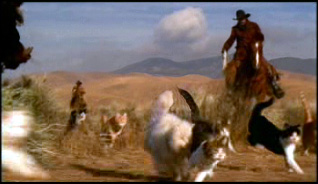
There would still be grade 8 teachers but their job would be to coordinate and supervise the work placements.  Yes, it would be like herding cats, but seriously, if we’re being honest here, isn’t teaching grade 8 like herding cats anyways?If you’re going to let the cats out of the bag, you might as well give them a wide open space in which to roam.

And who knows?

Perhaps if you’ve just spent the week cleaning out the ditches around your neighborhood, you might not be so quick to light them on fire.

I’m just sayin’.

————————————————————————————————————————————–

Checkin' for monkeys right now.
Checkin’ for monkeys right now.

UPDATE: I heard from the police this evening regarding our little junior arsonists. It seems three of the boys threw the fourth one under the bus and said that he lit the fire without them knowing. Apparently, this one rogue trouble maker ran off to the ditch (alone) to pee and then he started a fire. That makes sense to me. I always light a fire after I pee in the ditch. Yeah…and then monkeys fly out of my butt!!! Amazingly, their parents apparently bought this big stinking sack of doo-doo and all four got a “stern talking to” from the police.

I must say, I am a little concerned. I believe the United Nations puts “firm talking to”s in the same category as waterboarding. I hope the boys can get past this.

Princess, Rants, Raves, Teacher

Teachers: Love us or hate us, we’re still going to teach your kids.

A teacher for Prime Minister? What you talkin' about, Willis?
A teacher for Prime Minister? What you talkin’ about, Willis?!

If Liberal leader Justin Trudeau wins the next federal election in a few years, Canada will have a teacher for Prime Minister. Imagine! A teacher as the leader of our great country!

Although I think this would be fabulous, I can’t imagine it happening, seeing as many Canadians don’t even seem to want teachers to be teachers.

In last Saturday’s Globe and Mail, columnist Elizabeth Renzetti wrote an article titled, “Who You Callin’ A Teacher?” In it, she describes the twisted relationship the general public has with teachers.

“Is there another profession that’s so loved in theory and so loathed in practice?” she asked.

She continued by saying, “The love is everywhere to see, so long as it doesn’t cost us anything: Countless books, films and documentaries take a scrappy teacher as a hero…In real life, teachers get scant thanks from a public that expects them to perform ever greater miracles with ever fewer loaves and fishes.”

I love that biblical image: performing ever greater miracles with ever fewer loaves and fishes.

It’s what teachers do every day. Not only are we expected to cover the 3-R’s (and cover them well enough to beat out other countries on standardized tests) but we are also expected teach children things that their parents should, but often don’t, deal with at home (like, please don’t rape your classmate, put her picture on-line and then bully her into an early grave…but that’s a story for another time).  Add in the integration of special needs students who don’t get the support they need…oh, and do it with less money and little support.

What gives? Why the lack of respect for teachers? Renzetti explains it like this:

“There’s a particular store of resentment directed at teachers, perhaps because so much of their work is invisible to the outside world, but more likely out of numbing jealousy that they get summers off.”

I totally agree. In a past blog about snow days, I made the point that every job is different. Each has it’s own pros and cons and yet many people can’t get past the perks that teaching has to offer.

The green-eyed monster is a vicious, myopic creature. We often envy what we see on the surface.  Dig a little deeper and you’ll see all of the time, effort, blood, sweat and tears that go into a full school-year of teaching. There aren’t a lot of people who can do that well. And yes, I know there are bad teachers out there…just like there are bad nurses and bad toll booth operators and bad garbage men. But I think it’s fair to say that most teachers are well-trained professionals who have the best interests of their students in mind. It just wouldn’t be worth it if you didn’t.

But let’s go back to Justin Trudeau for a minute.

In his recent blog post, Drama Teaching Experience, fellow teacher, Grant Frost noted (tongue in-cheek) that the Conservative attack ads on Trudeau had it right. What could a drama teacher possibly bring to the job of prime minister? How could a teacher possibly lead our country? His response?

“Drama teachers are a special breed of people who develop co-operation in their students, work tirelessly so that others can shine, and help all students reach their fullest potential…Canadians should dream of such a leader.”

In the end, Renzetti sums it up: “Those who can, teach; those who can’t, make fun of them.”

Excuse me, Mr. Harper, but who’s teaching your kids?

Love
Love
Hate
Hate
Pop Culture, Rants, Suburban

Rehtaeh Parsons – Do her alleged “rapists” deserve our open hearts and minds?

writing76Last week, I published a blog post about Rehtaeh Parsons, the Cole Harbour girl who committed suicide following an alleged sexual assault and the subsequent bullying that followed. (see post below)

Today I received an interesting comment from someone with the handle TruthSeeker. It invites a different perspective. While I disagree with most of what the poster has to say, I do agree that we can’t start a witch-hunt. We can pressure our lawmakers and politicians to pursue a very difficult case, but we shouldn’t be taking the law into our own hands.

Kindness nurtures kindness; hate nurtures hate. And right now, there is a lot of hate floating around out there. Perhaps instead of ranting and raving about how could such a thing happen and kids today and how this wouldn’t have happened in MY day (yeah, it did…it just didn’t get spread all over the internet) we could try working on our own little circles – be kind to ourselves, each other. I want justice to be served, but hate isn’t going to get us there.

I invite you to read what TruthSeeker has to say, along with my follow-up comments, and let me know what YOU think. I understand the concept of innocent until proven guilty, but I have a very hard time believing that Rehtaeh Parsons was able to give informed consent to four of her male  classmates so that they could have sex with her, photograph the act, and then send the picture around to their peers. Call me crazy, but something about that story doesn’t ring true for me.

Law and Order - This is where I get most of my legal 'knowledge'.
Law and Order – This is where I get most of my legal ‘knowledge’.

p.s. I have been advised by a lawyer-friend that I don’t understand the ins-and-outs of the law very well. Which makes sense seeing as I have an English degree, not a law degree. Since he’s much smarter than me in all things legal, here’s what he had to say: Regrettably the law is not as cut and dry as we would like it to be. Law is an absolute premise (statutes saying you can’t do this or that), justice is the contextual premise. Your commentator is correct. We cannot presume guilt because of age, alcohol, the numbers involved. Just because it looks criminally icky (and it does look very icky) does not mean when the evidence is reviewed, or heard that it would qualify as a breach of the law.