Princess, Rants, Raves, Teacher

Teachers: Love us or hate us, we’re still going to teach your kids.

A teacher for Prime Minister? What you talkin' about, Willis?
A teacher for Prime Minister? What you talkin’ about, Willis?!

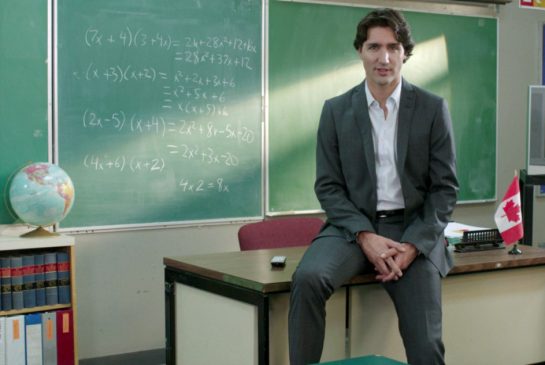
If Liberal leader Justin Trudeau wins the next federal election in a few years, Canada will have a teacher for Prime Minister. Imagine! A teacher as the leader of our great country!

Although I think this would be fabulous, I can’t imagine it happening, seeing as many Canadians don’t even seem to want teachers to be teachers.

In last Saturday’s Globe and Mail, columnist Elizabeth Renzetti wrote an article titled, “Who You Callin’ A Teacher?” In it, she describes the twisted relationship the general public has with teachers.

“Is there another profession that’s so loved in theory and so loathed in practice?” she asked.

She continued by saying, “The love is everywhere to see, so long as it doesn’t cost us anything: Countless books, films and documentaries take a scrappy teacher as a hero…In real life, teachers get scant thanks from a public that expects them to perform ever greater miracles with ever fewer loaves and fishes.”

I love that biblical image: performing ever greater miracles with ever fewer loaves and fishes.

It’s what teachers do every day. Not only are we expected to cover the 3-R’s (and cover them well enough to beat out other countries on standardized tests) but we are also expected teach children things that their parents should, but often don’t, deal with at home (like, please don’t rape your classmate, put her picture on-line and then bully her into an early grave…but that’s a story for another time).  Add in the integration of special needs students who don’t get the support they need…oh, and do it with less money and little support.

What gives? Why the lack of respect for teachers? Renzetti explains it like this:

“There’s a particular store of resentment directed at teachers, perhaps because so much of their work is invisible to the outside world, but more likely out of numbing jealousy that they get summers off.”

I totally agree. In a past blog about snow days, I made the point that every job is different. Each has it’s own pros and cons and yet many people can’t get past the perks that teaching has to offer.

The green-eyed monster is a vicious, myopic creature. We often envy what we see on the surface.  Dig a little deeper and you’ll see all of the time, effort, blood, sweat and tears that go into a full school-year of teaching. There aren’t a lot of people who can do that well. And yes, I know there are bad teachers out there…just like there are bad nurses and bad toll booth operators and bad garbage men. But I think it’s fair to say that most teachers are well-trained professionals who have the best interests of their students in mind. It just wouldn’t be worth it if you didn’t.

But let’s go back to Justin Trudeau for a minute.

In his recent blog post, Drama Teaching Experience, fellow teacher, Grant Frost noted (tongue in-cheek) that the Conservative attack ads on Trudeau had it right. What could a drama teacher possibly bring to the job of prime minister? How could a teacher possibly lead our country? His response?

“Drama teachers are a special breed of people who develop co-operation in their students, work tirelessly so that others can shine, and help all students reach their fullest potential…Canadians should dream of such a leader.”

In the end, Renzetti sums it up: “Those who can, teach; those who can’t, make fun of them.”

Excuse me, Mr. Harper, but who’s teaching your kids?

Love
Love
Hate
Hate
Rants, Raves, Suburban, Teacher

10 Simple Things You Can Do To Help Your Child Get a Better Report Card (and lead a happier life)

writing72

It’s that most wonderful time of the year…report card time!

I jest, of course. Report card time is often a stressful time for children, teachers, and parents alike.

After report cards come home, the question parents most often ask is, “What can I do at home to help my child?”

They think the answer is going to be complicated and involve expensive tutoring support. And sometimes these things are necessary.

But in many cases, there are some simple (free) things you can do at home that will make a positive difference in the classroom. They aren’t based on rocket science and they’ve been proven time and time again by people way smarter than me (people like scientists and psychologists).  They don’t just help kids get better grades…they help them to become healthier, happier people. And in the end, that’s really what we want, isn’t it?

Keep in mind that these suggestions are designed for parents of elementary school children. Once your child hits middle school, you want to have good habits and attitudes ingrained.

  1. Make sure your child gets enough sleep. Get the TV and the game system out of their bedroom. If they have a phone, have them turn it off and leave it in the kitchen at bedtime. You want your child to have a restful sleep so they are ready to learn once they get to school. Kids can’t focus on learning when they are tired.
  2. Get your child to school on time. It’s disruptive to everyone when kids arrive late. And it’s often the same kids who arrive late every day. I get it. You’re saying, “Oh, but it’s just so hard to get out the door on time.” Uh, yes, it can be. But you need to make it a priority. By consistently allowing your  child to be late, you are teaching them that punctuality is not important when it is.
  3. Help your child with personal hygiene issues. Check them out before they leave the house. (I often do the sniff test with my kids.) Body odor, dirty clothes, bad breath, basically anything that involves bad smells, is going to make your kid a social pariah and a target for bullies.
  4. Teach your child that everyone has strengths and challenges. Your child may be good at math but struggle with reading or vice versa or both. Make sure they know that this in no way measures their worth as a human being or anyone else’s worth, for that matter.
  5. On that note, make sure your child understands that neither their self-worth and nor your love is tied to a grade on their report card. Remember: no one will be checking their grade four math mark when they are applying for college or their first job.
  6. Teach your children that popularity comes with both power and responsibility. If your child has been blessed with a leader-like personality, help her to use this power for good, not for evil.
  7. Keep an eye on what your child hears, sees and reads. There is a reason movies and video games have ratings. Movies that are rated R are not for children. Video games that are rated mature are not for children. Grow a spine and say no.
  8. Sexy lingerie is not for little girls, it’s for grown women. Even though they make thongs and lacy bras for the pre-teen set doesn’t mean you have to buy them. It’s not cute…it’s wrong. Same goes for Playboy t-shirts and sweatpants that have “Juicy” written across the butt. If she begs, see #8 for advice.
  9. Healthy food makes for healthy minds and bodies. If your child is coming to school already jacked up on a sugar-fueled breakfast (or worse, no breakfast) we are already at a disadvantage.
  10. Finally, don’t trash your child’s teacher in front of your child. The fact is, unless you can negotiate a class change, your child and his teacher will be spending more daytime hours together than the two of you. Be part of a team – your child’s team.

writing71

Raves, Teacher

Yoga + Writing = Happy Students who Will Write and Write and Write…

Author: Sheree Fitch

I recently published a review of the book Breathe, Stretch, Write in the winter edition of AVISO, a magazine for Nova Scotia teachers. I was paid the princely sum of $75 for my efforts. (Yes, this why writers are such wealthy, wealthy people.)

But it wasn’t the promise of great riches that drew me to write this article.

This book has made my writing classes more enjoyable (for both me and my students), more interactive, and best of all, more productive.

Like most Canadian parents, I knew Sheree Fitch for her lyrical children’s books. Our family copy of Toes in My Noes is 18-years-old, ripped, stained and completely well-loved. You know those songs that get stuck in your head? Earworms? Sheree’s poems are like that. To this day, I can start with, “I stuck my toes in my nose and I couldn’t get them out” and someone in the house will follow with, “It looked a little strange and people began to shout!

As a teacher, I still read her poetry to my students, of all ages, because it’s fun and well written and the kids like it.

But this book? Wow. It’s an incredible teaching resource. She has made the lessons so easy to follow that you could put a sticky note on any one of the pages and leave it on your desk for a substitute teacher…without any explanation. It’s that straight-forward.

If you teach writing to children, do yourself a favour and get this book. You won’t regret it.

Here is a link the AVISO article, Breathe, Stretch, Write: Using Sheree Fitch’s Writing Resource in the Classroom.” The article opens in Adobe and starts on p.22.

To purchase this wonderful resource, link here to Pembroke Publishers.

Memoir, Princess, Suburban, Teacher, Uncategorized

Roots and Wings – Not Just for Breakfast Anymore

writing66Yesterday, I put my 14-year-old son on a plane and sent him 1,400 km across the country.

No, I haven’t completely lost my marbles. (If that were the case, I would have put his brother and his father and his senile old dog on the plane with him.)

He’s actually taking part in a week-long national program for youth called, Encounters with Canada. I already miss him like crazy, but I’m not worried. I’m confident that he is going to have an incredible experience. And it’s not just because he’s 14 going on 40 or because the program has been running for 31 years or even because his cousin just got back and said it was, like, totally awesome.

It’s because I know he’s resilient. He’s got the roots;  it was time for him to stretch his wings.

In his new book, Building Resilience in Children and Teens, Kenneth R. Ginsburg, says adults need to help children develop the seven crucial ‘C’s:

  1. competence
  2. confidence
  3. connection
  4. character
  5. contribution
  6. coping
  7. control

Ginsburg, an associate professor at the University of Pennsylvania, School of Medicine, says helping children develop these seven character traits will not only help them succeed in life, but it will also allow them to bounce back from whatever challenges life might throw at them. It makes them resilient and gives them roots.

To me, teaching is much like parenting. We need to trust that by the end of the school year, we have provided our students with the solid foundation they need to move confidently to the next grade or stage of their life. We also need to have faith that someone else will pick up the line once we let go.

As the end of June looms near, teachers often begin to panic. We worry that we haven’t given our students everything they need to be successful once they leave our classroom. We fret and wring our hands and say, “I don’t know what will happen to little Teddy in September when he goes into grade 1 (or 3, or 6 or 12 or university). He won’t get this kind of support next year.”

And yet he will.

One of the joys (?) of never having a permanent contract is that I have had the opportunity to work with students and teachers at almost every grade level, including a stint teaching ESL at a university. And I know that while elementary school teachers work their butts off to help their students, so do middle-school teachers and high school teachers. Even university and college professors will spend one-on-one time with struggling students. It’s something all good teachers have in common.

Letting a student or a child move on without us doesn’t mean we are throwing them to the wolves. It means that once we’ve done our job, we have to step back and trust. We have to trust that we have planted deep, strong roots that will help our children feel solid and secure and grounded. Then we have to trust that our children will remember these lessons and use them to guide their decisions.

Dr. Ginsburg says our goal should be to “think in the present and prepare for the future”.

He says that as teachers and parents we should aspire to help children become successful 35-year-olds. We shouldn’t always be thinking about the next grade or the next stage, but instead about how all of these experiences will come together to create an independent, self-sufficient happy adult. It’s about raising our children to be emotionally and socially intelligent.

Loving parents and strong teachers naturally give their children roots. That’s the easy part. Giving our children wings is a little harder. It means you have to let go. We spend so much time holding our children tight and keeping them safe, that letting them go seems to go against the very laws of nature.

It’s not easy, but when you let go and you see them soar?

It’s worth it.

Now, if you’ll excuse me. I have to go see if my son texted me. (He can fly free all he wants but he still has to touch base with mom every night.)

writing68

Memoir, Pop Culture, Princess, Raves, Suburban, Teacher

The Sunshine Award – Yes, it’s all about me.

Sunshine Award

You like me! You really like me!

It appears I am a Sunshine Girl! A lovely lady over at http://1tric.wordpress.com/
nominated me for this blogging award. She follows me, I follow her – everyone wins by getting to read interesting posts on a regular basis.

I’m not really sure what a Sunshine Award means, but it’s a very pretty icon and I guess it’s better than a kick in the pants, so I’ll take it. Hooray for me!

The award comes with some rules that I must follow. They are:

* Make sure to post this award on your blog site. – Done
* Nominate ten fellow bloggers. – Done (see bottom of page and everyone over on the side, as well.)
* Please answer the ten questions. – and…Done-er-i-no.

1. What inspired you to start blogging?

I was tired of stifling my voice. As public servants and members of a union, teachers are expected (and actually required, in most cases) to keep their opinions to themselves. As someone who is, how shall I say it nicely, not exactly quiet about her opinions, I needed a place to vent, share and express myself.

2. How did you come up with a name for your blog?

I have always wanted to write a book called, Confessions of a Suburban Princess. I figured this blog would put me on the road to that goal. But the name, Suburban Princess, was already taken, so I tagged ‘Teacher’ on to the end and decided I actually prefered it.

3. What is your favorite blog to read?

http://thebloggess.com/ She makes me laugh with every post. She also inspired me to write this blog. After I read her best-selling book,  I thought, “Damn! That girl is crazier than a cat in a paper bag and she wrote a blog and a book. Maybe I could, too!”  Check her out…you won’t be sorry.

4. Tell me about your dream job.

I’m still not sure what I want to be when I grow up but my dream job should include beagles, George Clooney, wine and chocolate.

5. Is your glass half-full or half-empty?

It’s usually completely empty…I’m a chugger.

6. If you could go anywhere for a week’s vacation, where would you go?

Barcelona, Spain.

7. What food can you absolutely not eat?

Liver. It’s disgusting. I had to eat it once a month when I was a teenager because my mother was convinced it would raise my iron levels when I was men-stru-ate-ing. Helllooo? Had we not heard of iron supplements in the 80’s?? There’s really no need to eat an animals’ internal organs.

8. Dark chocolate or milk chocolate?

I’d like to say dark because it’s politically correct and all, but no…I could eat milk chocolate until it flowed from my orifices like lava. Pour it overtop of a soft gummy bear and you have my heart forever.

9. How much time do you spend blogging?

Not a lot. I don’t like it to get in the way of my “Vampire Diaries” watching.

10. Do you watch TV? If so, what are your favorite shows?

Of course I watch TV…what do you think I am? Amish? I LOVE TV and now that I have Netflix, I may never go back to work. I’ll just sit at home, eating my milk chocolate, watching series after series…ahhhh, bliss. Favorite shows? Vampire Diaries, Days of our Lives, The Good Wife, The Mentalist, What not to Wear…yes, I am an intelligent girl.

That’s it for the questions about ME. (Sadly.) And now, for the final part of this assignment: ten of my favorite bloggers. Check them out, if you have time on your hands that you don’t know what to do with. Also: I love the people down the side of my blog. They are cool, too. Enjoy.

OTHER AWESOME BLOGGERS

1. http://carrieblueberry.wordpress.com/

2. http://illbeoutinaminute.com/

3. http://siobhancurious.com/

4. http://5kidswdisabilities.com/

5. http://anotherthousandwords.wordpress.com/

6. http://ineedanewman.wordpress.com/

7.  http://peachyteachy.wordpress.com/

8.  http://pamela984.wordpress.com/

9. http://yacantgohome.wordpress.com/

10. http://thefoodgirlintown.wordpress.com/

Memoir, Pop Culture, Princess, Rants, Raves, Suburban, Teacher

Why I can’t get cocky about my mental health.

writing34You should never get cocky about your mental health.

I should know. For the most part, I’m a confident, easy-going woman. I have an amazing family and a ridiculous number of incredible friends. My life is full of an abundance of riches.

And yet I’ve suffered from depression.

Mental illness can strike any of us. It doesn’t discriminate.

I’ve seen an 8-year-old boy crawling on the floor, barking like a dog because of a mental illness that has been made worse because of years of abuse and neglect.

I’ve seen a teenager who has suffered with anger issues and hormonal imbalances all of his life, suddenly discover drugs and spiral out of control.

I’ve seen a big, strong, confident man brought to his knees by depression.

Thousands of stories just like these play out every day, all over the world.

And yet many suffer in silence, too ashamed to admit that they have a problem. They are afraid of what other’s might think or how it might affect their position at work. And some of these fears are valid. Individuals still face the possibility of discrimination and recriminations when they disclose a mental illness.

Sometimes though, people do get the strength and the courage to reach out for help for their spouse, their child, or themselves, only to be told that help isn’t available.

They are often told that the wait-time for mental health services is months away. That’s too long a wait when you are on suicide watch for your 13-year-old daughter.

As a teacher, I often hear those in the “back to basics’ camp calling for less focus on helping children understand their feelings, so that more time can be spent on their math and spelling skills. They say it like self-esteem is a dirty word. As any teacher knows, a student with a mental health issue is a student who isn’t learning like they could. Our first priority as teachers is for our student’s well being. End of discussion.

Bell Canada started the Bell Let’s Talk fundraising campaign in 2010 and has since committed to investing $62 million in Canadian mental health initiatives. Some have criticized Bell, saying their campaign is nothing more than a marketing strategy designed to promote their brand and their products.

To that I say, well…duh. It’s marketing 101, not rocket science, people.

But if their program helps reduce the stigma around mental health and the money donated allows more access to quicker mental health services, then I don’t care why they are doing it.

You see, I’m one of the lucky ones. I have the financial means to access treatment, be it therapy, when needed or medication, when necessary. I also have the support of loving friends and family.

But I know how privileged I am.

Many Canadians don’t have that. Which is why we need to be there for each other.

So, thank you, Bell.

And Canada?

Let’s keep talking.

writing33

Teacher

CORRECTION: Michael Zwaagstra is a teacher, not a ‘former’ teacher.

In one of my previous blogs, I refered to Manitoba teacher, Michael Zwaagstra as a “former teacher”.

He is, in fact, a full-time teacher.

My apologies for my sloppy research and reporting.

If you would like to read his comments and reponse to my post, please check out the comment section of my last blog post.

In the interest of fairness, please check out his website. I don’t agree with everything he says or how he says it, but he makes some good points. http://michaelzwaagstra.com/

Rants, Teacher

­­­­­­­­­­­­­­­­­­­­­­­­­­­­­­­­A guide or a sage? Spare me the crap. (Part 1)

standardised-testing-1Michael Zwaagstra, a school teacher and self-professed saviour of the education system, recently wrote an opinion piece that appeared in my local paper.

He said universities are brainwashing teachers to be a “guide on the side rather than a sage on the stage”.

Oh, spare me the melodrama.

Most teachers I know don’t have time to pontificate on whether they are guiding or a ‘sage-ing’. They are too busy teaching.

In a series of Common Sense Education videos on YouTube, Mr. Z has proclaimed that the “progressive ideology” of today’s education system is a failure.

Ah, yes. Once again, the education system is a failure. I’d be upset by this…if I didn’t hear it every other day…every other year…in every other century.

Back in the ‘good ole days’, teachers taught one lesson plan to the class and everybody learned it and we were all happy about it.

Yup.

At least, that’s the story that keeps going around.

And yet, it’s not quite true. In fact, it’s not true at all.

People who yearn for those rose-coloured days of school, filled with spelling tests and multiplication memorization, tend to forget a lot of the facts that went along with these things.

Back in the 1970’s, when I started grade school, we didn’t have children with special needs in our classes. Children with physical or mental disabilities were sent to a different school. In my case, their school was right across the street from my school. They were literally a stones-throw away and we never got together. The kids in my class who struggled were labeled “slow learners” and they failed at the end of the year.

People who wonder why kids never fail anymore, hear me now: because it doesn’t work.

Do you seriously know anyone who failed a grade (or two or three) who went on to great academic success because they had a chance to “catch up”? In my high school, these were the guys who went to the liquor store for you in grade 11, because they were already 20. They weren’t burning up the academic world thanks to being held back. They were just putting in time in a system that didn’t give a crap about them or their special learning issues.

In 2005, the Journal of Applied School Psychology published a study of students and discovered that:

Across grade levels, those events rated as most stressful by children were: losing a parent, academic retention, going blind, getting caught in theft, wetting in class, a poor report card, having an operation, parental fighting, and being sent to the principal.” 

Wow – kids would rather go blind than fail a grade.

And don’t forget about those kids at the school across the street. They were segregated from their peers, kids who may have lived across the street or were in their own family.

Thankfully, things have changed.

This new “progressive ideology” tries to treat students with respect.

All children are now considered worthy of a public education. We know that everyone benefits from integration (when it’s properly funded and implemented). Those who learn in different ways are taught in different ways.

Unfortunately, it is very, very hard to provide individual support when you have 30 students and one teacher.

Mr. Zwaagstra says that teachers are burning themselves out trying to adapt their lesson plans to meet every child’s individual learning style. He advises:

“Instead of wasting their time designing multiple lessons for each topic, teachers should put more effort into instructing the whole class at the same time.”

I agree that teachers are burning themselves out (please see a picture of me labeled, Exhibit A), but this ‘helpful’ advice just doesn’t ring true today.

We need to make some changes to our education system, but just declaring it a failure and going back to the good old days isn’t going to work. It’s 2013.  We have to look at today’s kids in today’s system and figure out what works best for them.

To be continued…

Teacher

Six is not the new sixteen

What's wrong with you, baby? How come you can't read yet? How will you ever get a job?!
What’s wrong with you, baby? How come you can’t read yet? How will you ever get a job?!

“There are three kinds of lies: lies, damned lies, and statistics.”

Whenever I read doom and gloom stories, lamenting the reading scores of six-year-olds, I feel sad. When did six become the new sixteen? When did we start worrying about job prospects and future options for kids who still sleep with a nightlight?

Imagine you are six years old. You like running around aimlessly with your friends and playing video games and snuggling with your cat. School is OK, but reading is hard. Maybe your brain scrambles the letters, so you’re not seeing what the other kids see. Or maybe you can’t stay focused long enough to figure out what the words mean. You don’t really know what’s going on except that your parents keep bugging you to “pay attention” and you have to read with that “special teacher” who helps you and a few other kids.

Now, imagine you worked your little butt off for the whole year and your reading got a lot better. All of a sudden, you can read real books, some of them all by yourself. You’re feeling pretty good. You did all of the work your teacher asked you to do, but guess what? It still wasn’t enough to make all those grown-ups happy because you didn’t pass the “test” at the end of the year.

Well, gosh darn it. You tried your best and you did get better. How come it wasn’t enough?

Maybe it’s because you’re only 6 and you need more than one year of extra help. Maybe you spent most of this year learning how to tie your shoes and be a good friend and count to 10. Maybe your brain is just working slower on reading because it’s working overtime learning something else. Or maybe, just maybe, you have a learning disability, which means reading is going to be hard for you…maybe for awhile, maybe always.

An opinion piece by Paul Bennett in Saturday’s paper proclaimed Nova Scotia’s new literacy program Succeeding in Reading a failure. He said the assessments for the end of Year 1 (year 1 of a 3-year program, mind you) showed that 44 per cent of these grade 1 students failed to meet the expected standard for achievement. Ergo, the education system has once again failed these poor children.

Well, I suppose that’s one way of looking at it.

There is another way you could look at those numbers. Hmmm…what could that be? Oh, let’s see now. One hundred take away 44…carry the one…uh…56. That means 56 per cent of the children met the standards.

More than half…in the first year…of a brand-new three-year-program.

That’s starting to sound a bit better, isn’t it?

Here’s a novel idea: what if we started looking at test results differently?

Call me crazy but what if, instead of comparing widely different kids to each other, we compared them to themselves? What if we based their successes on their individual achievements?

Well, the critics will grumble, that’s not the way the real world works. These children are going to have to compete with people from all over the world to get jobs! They need to be competitive. 

Yes, yes. I agree. They will have to compete for jobs…in 15-20 years! Right now, no one is fighting them for the job of making their bed.

I want to know how many of these children became better readers over the course of the year. Based on my experience working with struggling readers, I would guess that almost every single child improved. Of course not all to the same extent, but some may have had farther to travel. These successes should be celebrated, not lamented.

Each individual result needs to be looked at, so we can see what each individual child needs in order to continue improving in the years to come. Tossing all of the results into one big melting pot and saying: Well, only this many kids passed the test, so therefore the entire program is a bust, is silly and irresponsible.

All kids learn differently, at their own pace. And they all need different things to be successful. How about we focus on that for change?

Princess, Rants, Raves, Suburban, Teacher

Snow Days – Every job is different

writing16

Today was a Snow Day. Capital “S”, capital “D”, which means students and teachers in our school district had the day off.

This also means the haters were out in full force once again on talk radio (or as I call it, Old Man Radio). Teacher-haters love Old Man Radio. It gives them a chance to publicly air their views about all the wrongs they see in society. Most of which are caused by lazy-ass teachers.

I wish I could host that radio show when these issues come up.

“School’s cancelled again, which means teachers get a day off! It’s crazy! Why should teachers be allowed to stay home when I have to go to work?!” shouts the irate caller, obviously taking a short break from his very important job.

“Oh, I see. So you think things should be the same for everybody?”

“Yeah, right. They should be the same.” The caller is happy now.

“So, everyone should make the same salary, work the same hours, get the same benefits, and have the same rules regarding their employment?”

“Well, no,” he stammers. “I mean, you know, every job is different.”

Right.

Every job is different.

writing17 scene-where-a-school-bus-slid-off-the-road-at-abercarn-178024589

There are so many jobs that I could not, would not, or choose not, to do.

As much as I would like to make the money that comes with being a surgeon, I didn’t have the brains or the desire to do all the work it takes to become one. Do I begrudge them their high salary and all the other perks of their job? No. I understand that in order to get those things, you have to do all the work beforehand and afterward and I wasn’t prepared to do that.

And as much as I would love to argue cases in a courtroom and learn all about interesting facts of laws, I know I wouldn’t have the ability to remain neutral. So, do I hate lawyers for doing what they do even though I wasn’t able to do it myself? Of course not. That would be illogical.

Someone in a high-end sales position can make my entire annual salary in bonuses and incentives. Does that annoy me? No, because I didn’t choose to go that route. I couldn’t sell ice cream to kids on a sunny day.

There are a million jobs that I think would be fascinating and interesting, but I know I’m not suited for them.

Here’s the thing: I don’t begrudge anyone the salary they make or the benefits they enjoy from their chosen career. I know that no matter what your job, there are ups and downs. Perks and pains. And people pick their careers according to what they want out of life. Do you want lots of money or do you want more freedom and free time? Do you want to help people, animals, or the environment? Everyone makes their own decisions.

I’m a teacher. I’m suited for that and I’m good at it. And I worked really, really hard to get to where I am today. Three degrees, student loans, numerous mandatory courses and workshops, and years of dead-end short-term contract positions just to get the opportunity for a full-time position.

Some people are suited to teaching. Other people are not. If you don’t enjoy teaching, if it doesn’t make you tick, you’re going to have a very difficult time in the classroom. If you’re doing it for the summer break or the rare Snow Day, enjoy that time, because you are going to pay for it the rest of the year.

That’s why it ticks me off when non-teacher-types complain about Snow Days.

Snow Days are magical for those of us who get to experience their joy.

Unfortunately, not everyone gets to have this experience. In fact, the majority of the population doesn’t. Most people have to leave their homes extra early in the middle of dangerous driving conditions in order to get to their job.

And I’m sorry about that. If I ruled the world, unless you were in a mandatory service industry (like fire, hospital or police personnel), I’d let you stay home until the plows cleared the streets and made it safe for everyone to get back on the roads. But since I don’t, all I can say is this.

Yes, teachers get the day off during a Snow Day. It’s part of the job. Just like cleaning up a child when they get sick on themselves. Or helping them through an argument with a friend. Or teaching them how to read when that’s the hardest part of their day. It’s a part of the job like writing report cards late into the night. And being cursed at by angry students and parents. It’s a part of the job like a million other things that make up the position.

I’m not going to complain about doing any of those things; however, I’m also not going to apologize for the occasional Snow Day or the summers off.

I have the job I chose and worked my butt off for. And for now…my job includes Snow Days.

UPDATE: March 1, 2015Are you a teacher? Do you want your say on snow days and other issues affecting teachers? Click here to add your two cents to a survey. It is completely anonymous and takes less than 5 minutes to complete. 

writing15