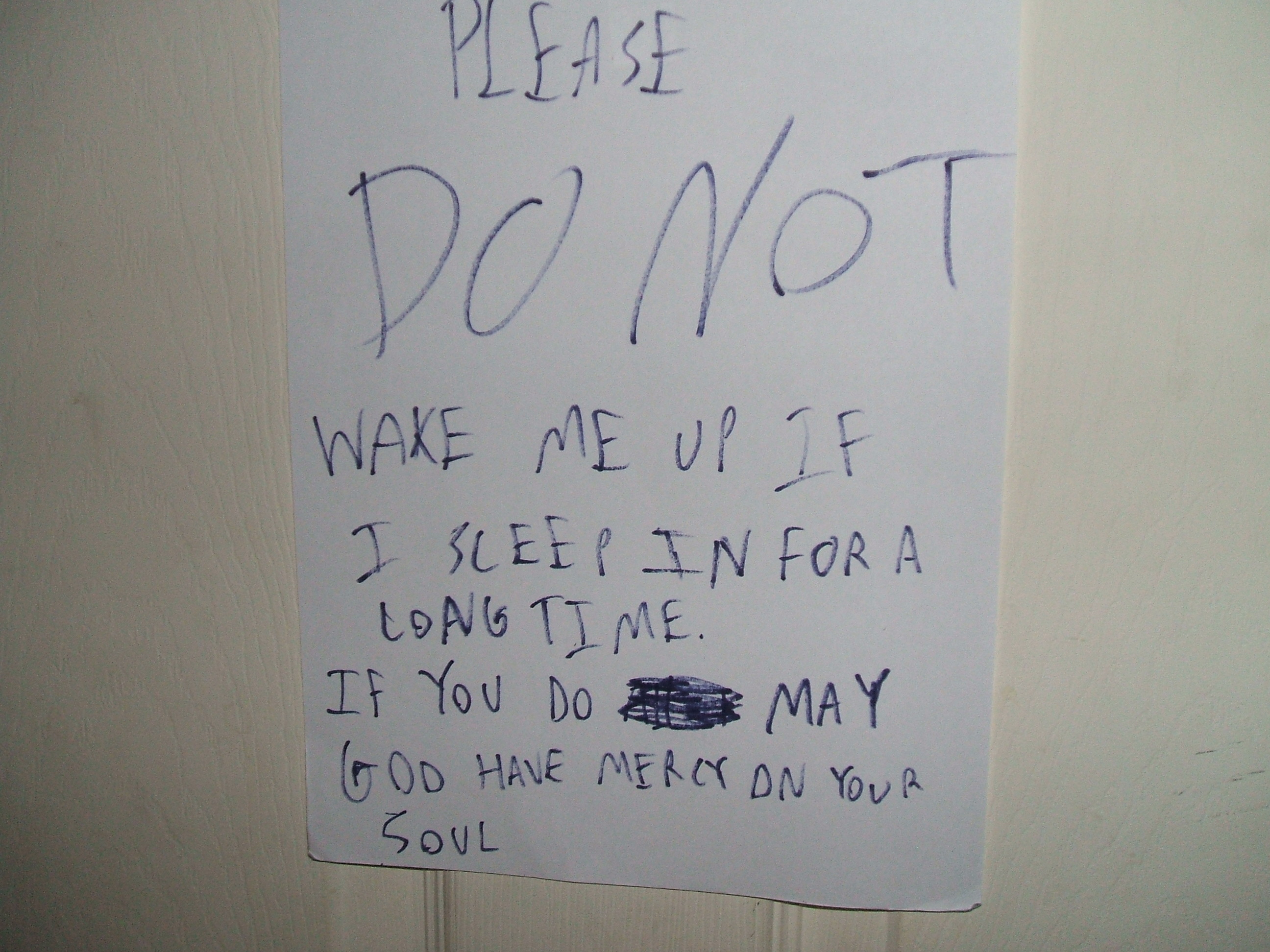
Yet another reason why some animals eat their young.


Blogging to Make Public Education Better One Story at a Time
Yet another reason why some animals eat their young.

It’s that most wonderful time of the year…report card time!
I jest, of course. Report card time is often a stressful time for children, teachers, and parents alike.
After report cards come home, the question parents most often ask is, “What can I do at home to help my child?”
They think the answer is going to be complicated and involve expensive tutoring support. And sometimes these things are necessary.
But in many cases, there are some simple (free) things you can do at home that will make a positive difference in the classroom. They aren’t based on rocket science and they’ve been proven time and time again by people way smarter than me (people like scientists and psychologists). They don’t just help kids get better grades…they help them to become healthier, happier people. And in the end, that’s really what we want, isn’t it?
Keep in mind that these suggestions are designed for parents of elementary school children. Once your child hits middle school, you want to have good habits and attitudes ingrained.

 Yesterday, I put my 14-year-old son on a plane and sent him 1,400 km across the country.
No, I haven’t completely lost my marbles. (If that were the case, I would have put his brother and his father and his senile old dog on the plane with him.)
He’s actually taking part in a week-long national program for youth called, Encounters with Canada. I already miss him like crazy, but I’m not worried. I’m confident that he is going to have an incredible experience. And it’s not just because he’s 14 going on 40 or because the program has been running for 31 years or even because his cousin just got back and said it was, like, totally awesome.
It’s because I know he’s resilient. He’s got the roots; it was time for him to stretch his wings.
In his new book, Building Resilience in Children and Teens, Kenneth R. Ginsburg, says adults need to help children develop the seven crucial ‘C’s:
Ginsburg, an associate professor at the University of Pennsylvania, School of Medicine, says helping children develop these seven character traits will not only help them succeed in life, but it will also allow them to bounce back from whatever challenges life might throw at them. It makes them resilient and gives them roots.
To me, teaching is much like parenting. We need to trust that by the end of the school year, we have provided our students with the solid foundation they need to move confidently to the next grade or stage of their life. We also need to have faith that someone else will pick up the line once we let go.
As the end of June looms near, teachers often begin to panic. We worry that we haven’t given our students everything they need to be successful once they leave our classroom. We fret and wring our hands and say, “I don’t know what will happen to little Teddy in September when he goes into grade 1 (or 3, or 6 or 12 or university). He won’t get this kind of support next year.”
And yet he will.
One of the joys (?) of never having a permanent contract is that I have had the opportunity to work with students and teachers at almost every grade level, including a stint teaching ESL at a university. And I know that while elementary school teachers work their butts off to help their students, so do middle-school teachers and high school teachers. Even university and college professors will spend one-on-one time with struggling students. It’s something all good teachers have in common.
Letting a student or a child move on without us doesn’t mean we are throwing them to the wolves. It means that once we’ve done our job, we have to step back and trust. We have to trust that we have planted deep, strong roots that will help our children feel solid and secure and grounded. Then we have to trust that our children will remember these lessons and use them to guide their decisions.
Dr. Ginsburg says our goal should be to “think in the present and prepare for the future”.
He says that as teachers and parents we should aspire to help children become successful 35-year-olds. We shouldn’t always be thinking about the next grade or the next stage, but instead about how all of these experiences will come together to create an independent, self-sufficient happy adult. It’s about raising our children to be emotionally and socially intelligent.
Loving parents and strong teachers naturally give their children roots. That’s the easy part. Giving our children wings is a little harder. It means you have to let go. We spend so much time holding our children tight and keeping them safe, that letting them go seems to go against the very laws of nature.
It’s not easy, but when you let go and you see them soar?
It’s worth it.
Now, if you’ll excuse me. I have to go see if my son texted me. (He can fly free all he wants but he still has to touch base with mom every night.)

In one of my previous blogs, I refered to Manitoba teacher, Michael Zwaagstra as a “former teacher”.
He is, in fact, a full-time teacher.
My apologies for my sloppy research and reporting.
If you would like to read his comments and reponse to my post, please check out the comment section of my last blog post.
In the interest of fairness, please check out his website. I don’t agree with everything he says or how he says it, but he makes some good points. http://michaelzwaagstra.com/
 The student make-up of your average classroom has changed so dramatically over the past few decades that it is barely recognizable. So why are reformists suggesting we go “back to basics”? Why not go forward?
In a recent article, Mr. Zwaagstra, a representative for a group called Common Sense Education, says that teachers need to stop treating students like individuals and instead, focus on the subject:
Instead of wasting their time designing multiple lessons for each topic, teachers should put more effort into instructing the whole class at the same time. Students would learn more and teachers would have more time to focus on things that really matter.
Quick question, Mr. Zwaagstra: when was the last time YOU, or any of your Common Sense Educating peers, were in a classroom? I’m not talking about a homogeneous grade 11 Chemistry class where all of the students have already met the pre-requisites. That’s a challenging job but it’s not the same as teaching in a mixed abilities classroom.
I’m talking about a public school elementary or middle school classroom, where integration is fully in place.
Let me paint you a little picture I like to call “reality”.
It’s September and you have been assigned a class of 30 beautiful grade 4 children. You can tell already that they are nice kids and you want to do your absolute best to help them be the best they can be.
Besides yourself, you have a one teacher’s aid (or EPA) assigned to work one-on-one with a high needs student in your class.
There are thirty (30) students in your room. Six (6) have Individual Plans (meaning they are at least 2 grade levels behind their peers and have specific goals designed to help them improve), four (4) have Behavior Plans (this means they are disruptive to themselves, the teacher and the rest of the class), and five (5) have Adaptations, meaning they can meet the outcomes if they have a special accommodation in place. These adaptations can vary wildly, from making sure the student sits at the front of the room to having someone to write down everything they want to say because they have a writing disability. (Note: Some children have more than one of these plans in place.)
That makes 15 children who need some sort of individualized support. Half your class.
Now, let’s go deeper. Those six children with Individual Plans? They are all different. They are as different as you and I, which means their plans are different.
One boy, who is big for his age, has severe autism and operates at a 3-year-old level, needing support for toileting and all other personal needs. He shouts out when he gets upset or overwhelmed or just plain excited and has been known to bite. He has EPA support and spends part of his day in the learning centre.
One boy has Asperger syndrome, which means he misses a lot of the social cues that his peers understand. This often results in hurt feelings and social unrest. He also cannot complete his work with one-on-one support. He does not have an EPA.
Two children are multiple grade levels behind in their math and two others can barely read at a grade 1 level. They do not have EPA support either.
Let’s see, what’s next?
Oh right. Behavioural issues.
One of your students lives in foster care, having suffered neglect and abuse at the hands of his parents and grandparents. At any given time, he could be crawling on the floor, barking like a dog, or snuggling in close, asking you to “please, please be my mommy.” The next minute he tells you to f-off and the struggle to remove him from the classroom, once again, begins. He does not have an EPA.
And remember, he’s only one of four students with his own behaviour plan. And they are all different. Some have ADHD, which may mean they are all over the place or it may mean they are completely introverted. You will figure out which is which pretty quickly.
What about the other 15?
A few of these kids are your very bright and very independent learners. They are usually placed at the back of the room because the front is needed for the kids who need one-on-one support and special cueing. They are usually bored senseless because you have to go over the same lesson 3 times when they have already gotten it the first time.
Finally, you have your so-called average kids who will do their work and make A’s and B’s and fly under the radar all year, unless you purposely make it your mission to focus on them.
That’s your class. I’ll admit…it’s a challenging one but sadly, it’s not unusual.
So, tell me, how do you focus on the subject and not the student when you have such a rich, diverse group of learners? How do you put aside everything you know about the child as a learner and just say, “The heck with it. I’m teaching one lesson, one way and if you don’t get it, too bad.”
How is this common sense?
 Michael Zwaagstra, a school teacher and self-professed saviour of the education system, recently wrote an opinion piece that appeared in my local paper.
He said universities are brainwashing teachers to be a “guide on the side rather than a sage on the stage”.
Oh, spare me the melodrama.
Most teachers I know don’t have time to pontificate on whether they are guiding or a ‘sage-ing’. They are too busy teaching.
In a series of Common Sense Education videos on YouTube, Mr. Z has proclaimed that the “progressive ideology” of today’s education system is a failure.
Ah, yes. Once again, the education system is a failure. I’d be upset by this…if I didn’t hear it every other day…every other year…in every other century.
Back in the ‘good ole days’, teachers taught one lesson plan to the class and everybody learned it and we were all happy about it.
Yup.
At least, that’s the story that keeps going around.
And yet, it’s not quite true. In fact, it’s not true at all.
People who yearn for those rose-coloured days of school, filled with spelling tests and multiplication memorization, tend to forget a lot of the facts that went along with these things.
Back in the 1970’s, when I started grade school, we didn’t have children with special needs in our classes. Children with physical or mental disabilities were sent to a different school. In my case, their school was right across the street from my school. They were literally a stones-throw away and we never got together. The kids in my class who struggled were labeled “slow learners” and they failed at the end of the year.
People who wonder why kids never fail anymore, hear me now: because it doesn’t work.
Do you seriously know anyone who failed a grade (or two or three) who went on to great academic success because they had a chance to “catch up”? In my high school, these were the guys who went to the liquor store for you in grade 11, because they were already 20. They weren’t burning up the academic world thanks to being held back. They were just putting in time in a system that didn’t give a crap about them or their special learning issues.
In 2005, the Journal of Applied School Psychology published a study of students and discovered that:
“Across grade levels, those events rated as most stressful by children were: losing a parent, academic retention, going blind, getting caught in theft, wetting in class, a poor report card, having an operation, parental fighting, and being sent to the principal.”
Wow – kids would rather go blind than fail a grade.
And don’t forget about those kids at the school across the street. They were segregated from their peers, kids who may have lived across the street or were in their own family.
Thankfully, things have changed.
This new “progressive ideology” tries to treat students with respect.
All children are now considered worthy of a public education. We know that everyone benefits from integration (when it’s properly funded and implemented). Those who learn in different ways are taught in different ways.
Unfortunately, it is very, very hard to provide individual support when you have 30 students and one teacher.
Mr. Zwaagstra says that teachers are burning themselves out trying to adapt their lesson plans to meet every child’s individual learning style. He advises:
“Instead of wasting their time designing multiple lessons for each topic, teachers should put more effort into instructing the whole class at the same time.”
I agree that teachers are burning themselves out (please see a picture of me labeled, Exhibit A), but this ‘helpful’ advice just doesn’t ring true today.
We need to make some changes to our education system, but just declaring it a failure and going back to the good old days isn’t going to work. It’s 2013. We have to look at today’s kids in today’s system and figure out what works best for them.
To be continued…

Today was a Snow Day. Capital “S”, capital “D”, which means students and teachers in our school district had the day off.
This also means the haters were out in full force once again on talk radio (or as I call it, Old Man Radio). Teacher-haters love Old Man Radio. It gives them a chance to publicly air their views about all the wrongs they see in society. Most of which are caused by lazy-ass teachers.
I wish I could host that radio show when these issues come up.
“School’s cancelled again, which means teachers get a day off! It’s crazy! Why should teachers be allowed to stay home when I have to go to work?!” shouts the irate caller, obviously taking a short break from his very important job.
“Oh, I see. So you think things should be the same for everybody?”
“Yeah, right. They should be the same.” The caller is happy now.
“So, everyone should make the same salary, work the same hours, get the same benefits, and have the same rules regarding their employment?”
“Well, no,” he stammers. “I mean, you know, every job is different.”
Right.
Every job is different.

There are so many jobs that I could not, would not, or choose not, to do.
As much as I would like to make the money that comes with being a surgeon, I didn’t have the brains or the desire to do all the work it takes to become one. Do I begrudge them their high salary and all the other perks of their job? No. I understand that in order to get those things, you have to do all the work beforehand and afterward and I wasn’t prepared to do that.
And as much as I would love to argue cases in a courtroom and learn all about interesting facts of laws, I know I wouldn’t have the ability to remain neutral. So, do I hate lawyers for doing what they do even though I wasn’t able to do it myself? Of course not. That would be illogical.
Someone in a high-end sales position can make my entire annual salary in bonuses and incentives. Does that annoy me? No, because I didn’t choose to go that route. I couldn’t sell ice cream to kids on a sunny day.
There are a million jobs that I think would be fascinating and interesting, but I know I’m not suited for them.
Here’s the thing: I don’t begrudge anyone the salary they make or the benefits they enjoy from their chosen career. I know that no matter what your job, there are ups and downs. Perks and pains. And people pick their careers according to what they want out of life. Do you want lots of money or do you want more freedom and free time? Do you want to help people, animals, or the environment? Everyone makes their own decisions.
I’m a teacher. I’m suited for that and I’m good at it. And I worked really, really hard to get to where I am today. Three degrees, student loans, numerous mandatory courses and workshops, and years of dead-end short-term contract positions just to get the opportunity for a full-time position.
Some people are suited to teaching. Other people are not. If you don’t enjoy teaching, if it doesn’t make you tick, you’re going to have a very difficult time in the classroom. If you’re doing it for the summer break or the rare Snow Day, enjoy that time, because you are going to pay for it the rest of the year.
That’s why it ticks me off when non-teacher-types complain about Snow Days.
Snow Days are magical for those of us who get to experience their joy.
Unfortunately, not everyone gets to have this experience. In fact, the majority of the population doesn’t. Most people have to leave their homes extra early in the middle of dangerous driving conditions in order to get to their job.
And I’m sorry about that. If I ruled the world, unless you were in a mandatory service industry (like fire, hospital or police personnel), I’d let you stay home until the plows cleared the streets and made it safe for everyone to get back on the roads. But since I don’t, all I can say is this.
Yes, teachers get the day off during a Snow Day. It’s part of the job. Just like cleaning up a child when they get sick on themselves. Or helping them through an argument with a friend. Or teaching them how to read when that’s the hardest part of their day. It’s a part of the job like writing report cards late into the night. And being cursed at by angry students and parents. It’s a part of the job like a million other things that make up the position.
I’m not going to complain about doing any of those things; however, I’m also not going to apologize for the occasional Snow Day or the summers off.
I have the job I chose and worked my butt off for. And for now…my job includes Snow Days.
UPDATE: March 1, 2015 – Are you a teacher? Do you want your say on snow days and other issues affecting teachers? Click here to add your two cents to a survey. It is completely anonymous and takes less than 5 minutes to complete.

 Many (many, many) years ago, I did my student teaching at my old high school with my old high school English teacher. I was even placed in the same room where I passed notes to my friends and tried not to fall asleep during first period. On the first day of my internship, my advisor/former teacher gave me a few tips and then retired to the staff room, leaving me on my own to teach a room full of teenagers. It was a baptism by fire and I made plenty of mistakes. I wouldn’t recommend it, but luckily it worked out OK in the end. I had a wonderful student teaching experience that made me determined to pursue a teaching career.
Many years later, the tables turned and I was the (semi) experienced teacher assigned my very first student teacher. I was excited to get her because I had a challenging class that year. I thought two adults in the room would be better than one. Unfortunately, it was not a good experience. My student teacher was overwhelmed with part-time work and family responsibilities and was argumentative about anything that required work on her part. Looking back on it, there are lots of things I could have done differently. Here are some of the things I wish I had said.
10. I have no doubt that you had a great education but you don’t know everything just yet. Listen to other teachers, talk to them about what you’re doing, take advice gracefully. You don’t have to do everything that is suggested, but do understand that experience does count for something.
9. Learn everyone’s name, not just your students (although you should know theirs as soon as possible). Talk to the ladies in the cafeteria and the man who cleans your classroom. Make a point to check in with the principal and vice-principal when you have some free time and see how you can help. This will go a long way towards getting you some work as a substitute teacher once you graduate.
8. Treat everyone with equal respect, no matter how old or young they are. I have taught students from 5-50+ and I generally don’t change the way I deal with them. Of course, you use different words depending on their age and understanding, but children deserve to be treated with the same respect as adults. For godsake, never use baby-talk. You aren’t their grandmother, you’re their teacher. I don’t care how cute little Suzy looks in her new dress, she’s not a baby being passed around at a baby shower. She needs you to treat her like a learner, not a doll.
7. Be prepared! In fact, be over prepared. I can’t stress this enough. The quickest way to lose the attention of your class is to be scrambling around trying to find your notes or to upload something on to the overhead projector. The minute they see that you’re weak, you’ve lost them and it’s really hard to get them back.
6. Understand that your students will all be working at different levels of ability. Make sure you read and understand their individual adaptations and program plans. Take special care to spend time with the special needs students in your room who have their own teacher’s aide. Some of your sweetest experiences may be with these kids; don’t miss out on that opportunity. Remember: you are responsible for ALL the students in your class.
5. Be prepared to be flexible. There may be an assembly or a fire drill that causes you not to get something covered that you were hoping to get done. Or you may think you are going to get through a math concept in one day only to discover it’s going to take a lot longer than that. Remember: you’re teaching to the children in front of you, not the lesson plan on your desk. It’s a map but the children are your compass. They will tell you what needs more or less attention. Watch them carefully.
4. Get to know your students. Talk to them. Ask your cooperating teacher if you can head up a current events conversation a few times a week. See who plays sports and who plays an instrument. Find out who got a new cat and whose grandmother just died. Even if you’re not on duty, go outside at recess and see what your students are up to. Take a walk through the cafeteria at lunchtime and see who is eating alone and who is stealing treats from someone else’s lunch. Some kids are very different in social situations than they are in a classroom. It helps to know them when you are trying to teach them.
3. Spend some time getting to know the specialists in your school. Talk to the resource teachers, learning centre specialists, school psychologist and speech therapists. It’s important that teachers work as part of a team. Some kids require a whole village of support in order to be successful. You might also find that you are interested in pursuing a career outside of teaching but still within the school system. Teaching doesn’t have to be a 30-year-career. There are lots of opportunities out there.
2. Cooperate with your cooperating teacher. There is nothing worse for a cooperating teacher than having a difficult student teacher. It’s like having an extra student. Yes, we know you don’t get paid. And yes, we understand you may have a part-time job or a family or a dog that needs to be walked. But you’ve taken on this responsibility and you need to take it seriously.
1. Finally, take some time to reflect on whether or not you actually like what you’re doing. You may discover that it’s not what you expected. Perhaps this ISN’T how you want to spend the next 20-30 years of your life. And that’s OK. Finish your degree and look for something else. It’s better than spending your life doing something you don’t enjoy. But if you do LOVE it, grit your teeth and work your butt off for free. Someday, karma will reward you.

It’s easy to understand why schools are built with wheelchair ramps – without the ramp, a child in a wheelchair would not be able to access the same educational services as other children his or her age. (Insert – duh! – here.) Even the most curmudgeonly among us would have a hard time complaining about taxpayer money being spent to install a ramp at a school.
When a child’s disabilities are invisible, however, that’s when things start to get confusing for some people. A child with a learning disability has average to above average intelligence and, like most of us, has areas of strength but also areas of serious weakness. These challenges often require extra support, alternate programming and adaptations in order for that child to be successful. This, like anything else that steps outside the norm, costs money. And once you start talking money, human compassion starts to wane.
Recently the Supreme Court of Canada ruled in favor of a family who took their child out of public school in British Columbia in grade 4 and put him in a private school when it became clear the school could not meet his special learning needs.
In the early 1990’s, Jeffrey Moore was struggling to keep up with his Grade 2 classmates. Despite extra help from his parents and teachers, Jeff could still not read. The school psychologist was brought in and it was discovered that Jeff had a learning disability – dyslexia, which meant he had great difficulty reading. She recommended that he attend the local diagnostic centre in order to receive the help he needed. Unfortunately, before Jeff had a chance to enroll, the local school board closed the centre. By this point, Jeff was suffering from low self-esteem, constant headaches, stress and was falling further and further behind his peers. His school was offering him the same services that other children with his issues were getting, but they weren’t enough. He needed specific services that his public school and school board were unable to provide.
Based on recommendations from the school psychologist, Jeff’s parents felt their only option was to enroll him in a private school for children with learning disabilities. So they did. It was expensive but it worked. Jeff’s reading improved and he was a much happier little boy. But his parents felt it wasn’t fair. They felt the government had a responsibility to provide an education to all students, even those with learning disabilities.
So, in 1997, Jeff’s father, Frederick Moore, filed a human rights complaint against the School District and the British Columbia Ministry of Education alleging that Jeff had been discriminated against because of his disability and had been denied “a service . . customarily available to the public”, contrary to s. 8 of the Human Rights Code, R.S.B.C. 1996, c. 210.
Basically what Jeff’s parents were asking was for their child to be given the same chances as every other child to be successful at school. Because of his learning disability, he needed something extra in order to level the playing field. He needed a ramp upon which he could climb the hill that dyslexia had put in front of him.
This is the analogy Madam Justice Rosalie Abella used when awarding the unanimous decision of the Supreme Court in favor of Jeff and his parents.
“Adequate special education, therefore, is not a dispensable luxury. For those with severe learning disabilities, it is the ramp that provides access to the statutory commitment to education made to all children in British Columbia.” Moore v. British Columbia (Education),2012 SCC 61.
The justices awarded Jeff’s parents $100,000 for the costs involved for his private schooling. Jeff, now 23, was awarded $10,000 for the discrimination he suffered.
Jeff’s father said he was driven to take the case as far as he could because he felt public schools had an obligation to help all children succeed. Moore’s lawyer Frances Kelly said the decision sets a national precedent and sends a message to all public schools. “This is a warning to them that they have to comply with their duties under the human rights code to ensure that students with learning disabilities have the same access to education as other students.” (http://www.vancouversun.com/news/education/North+Vancouver+school+district+discriminated+against/7524870/story.html#ixzz2CPUpXZ4v)
The Globe and Mail published an editorial immediately following the ruling strongly condemning the Supreme Court for “overstepping its authority”.
The Supreme Court of Canada has opened a Pandora’s box for public school boards by finding that a British Columbia school district discriminated against a dyslexic child when, during a financial crisis, it closed a special-education centre that provided him intensive help in learning to read. From here on, schools, school boards or provinces could be forced to bleed other programs to meet court-ordered educational standards for special-needs students. (http://www.theglobeandmail.com/commentary/editorials/supreme-court-ruling-on-special-education-opens-pandoras-box/article5169193/)
On November 16, the Vancouver Sun published an opinion piece by Derek James From, a staff lawyer with the Canadian Constitution Foundation. It reads like diatribe from a right-wing American pundit. He notes that Jeffrey is now making a good living as a plumber and therefore, no blood, no foul.
“Perhaps it’s Jeffrey, not the hard-working B.C. taxpayers, who should pay his father back.”http://www.vancouversun.com/news/Supreme+Court+ruling+rejects+equality+favour+another/7562452/story.html#ixzz2CnAp9F1R
Wow – talk about totally missing the point. Jeffrey is making a good living now thanks to the fact that he was taken from his public school and put in a private school, at his parent’s expense, where his needs were met. Who knows where he would be now if his parents had not been able to make this commitment?
But Jeffrey Moore’s individual situation is not the point of this story. The Supreme Court of Canada has said that children with learning disabilities have every right to be taught the way they learn. I will repeat: Children have a right to be taught the way they learn. We have to stop cramming our little square pegs into round holes. It’s not working. These children have a disability that requires a “ramp”. Just because it’s not visible doesn’t mean it’s not there. And yes, it’s going to cost money. Probably lots of money. But the argument that this will hurt the so-called average child is bull-puckey. Any teacher who has ever taught a class that includes a child with a learning disability (and that would be every teacher in North America, I would guess) can tell you that having no support for that child affects every other child in the room. I have had classes where, no lie, half of my class had some sort of learning difference, some very severe, and classroom support was minimal. When those children don’t have the supports they need, do you know who provides it? The classroom teacher. And who suffers when the classroom teacher’s attention is pulled in one direction and then another? All of the children, even the so-called average kids.
This ruling by the Supreme Court may change the face of education. And I hope it does. We are going to have to re-think the way we do things. There isn’t an endless pot of money at the end of the rainbow. Things will have to cut and reduced. The status quo is going to have to change in order to meet the needs of all children. And so it should.
The winds have changed. It’s time to adjust out sails.
Read the full Supreme Court ruling (ie. the legal mumbo-jumbo) here: http://scc.lexum.org/decisia-scc-csc/scc-csc/scc-csc/en/item/12680/index.do
Quick: what’s the first rule of Fight Club? Remember the 1999 movie starring Brad Pitt where he takes his shirt off a lot and fights other buff guys in basements and parking lots? (OK, stop thinking about that now. Focus. Back to me.) So, the first rule of Fight Club? You do not talk about Fight Club. The second rule of Fight Club is: you DO NOT talk about Fight Club.
Being part of the teacher’s union is sort of like being part of Fight Club (minus the hot guys with their shirts off – that may happen in some places but sadly, never where I’ve worked). As a teacher, I do my job and I don’t talk about what my union is doing, at least not in a non-positive, super-supportive way. Now don’t get me wrong. I appreciate everything my union has done for me. God knows, if I had to teach and negotiate my own contract, I would have left long ago. They allow me to do my job; however, just as there are things I could do better as a teacher, I think there are things my union could do better as well.
Across North America we are seeing teacher unions decimated by their government leaders and demonized in the court of public opinion. In order to balance budgets and leave no child behind, governments have slowly but surely worked to take power and control away from the unions and put it into the hands of administrators. In response, many unions have retaliated by threatening to strike, only to have that option legislated away. When they use the only other means available to them, their actual work with children, they find themselves attacked by parents and the press. Teachers are only in the profession for the money, the benefits and the summers off! It seems like teachers and their unions just can’t win.
So, where do we go from here?
While researching teacher unions in the 21st century, I came across an interview with Randi Weingarten, president of the American Federation of Teachers. Ms. Weingarten, whose union represents more than 1.5 million teachers across the United States, was a key speaker at the Aspen Ideas Festival this summer. Her presentation Can Teacher Unions be Partners in Reforming Schools in the 21st century? focused on what teacher unions need to do better in this ever-changing world.
She admitted that unions, hers in particular, haven’t always put quality teaching at the forefront.
“We…were wrong. Not that we meant to be wrong but our job initially was about fairness, not about quality. Our goal was to make sure teachers and our other members were treated fairly. Our job has to be about quality as well. Due process has to be about fairness, not about job security for life. Not about being used as an excuse for managers not to manage or a cloak for incompetence.”
She said it’s not enough for some teachers to be great.
“What we have to do is ensure good to great for all teachers.”
In response to questions posed by Walter Isaacson, President and CEO of the Aspen Institute, Ms. Weingarten touched on a variety of subjects, including the controversial “bar exam for teachers”, but her focus always went back to making teachers accountable.
“We need to have real evaluation systems that can assess whether teachers are doing their jobs. And if they’re not, you help them. If they’re not, they shouldn’t be teachers.”
“What we have seen is that schools that work…have collaborative environments where there’s a real thoughtful process for how you recruit, support, retain and yes, dismiss, teachers.”
So, how do we make certain that our children are getting the teachers they deserve?
First, she said, we need to ensure that teachers have the tools and conditions they need in order to teach properly.
“You can’t give new teachers a rigorous kind of methodology to teach and then basically say, ‘You’re on your own.’ It’s not fair to the kids and it’s not fair to the teachers.”
Then, she said, teachers need to ask themselves: Did I teach the material? And most importantly: Did the students learn it? This is where standardized testing has a role to play. Sometimes a teacher can present a lesson and feel that it was the best lesson she has ever taught, only to discover that the majority of students didn’t really understand.
Ms. Weingarten was quick to point out that while standardized tests serve a purpose, they should not become the end goal.
“You have to look at the data to see if kids get it,” she told the audience. “You have to have enough data so that people concentrate on it, but when it becomes predominant then education becomes about testing and not about teaching and frankly the current generation of tests have no connection with what we have to teach kids right now. [They] are about the memorization of facts as opposed to about how kids critically think.”
If the jobs of tomorrow require critical thinking and creativity, why are we still teaching kids to memorize facts and then regurgitate them on a series of standardized tests? According to Ms.Weingarten, this focus on testing is one of the most serious problems facing education today.
Teachers need to be trained to teach critically, she said. New teachers need to be able to walk into a classroom feeling prepared, as opposed to the ‘sink or swim’ model we have now. Half of all teachers in the United States leave teaching within the first three to five years, she pointed out.
“Love is important. You have to love kids to be a school teacher. You have to know your content. And you have to have a pedagogical bag of tricks so that you can differentiate instruction.”
This ability to offer differentiated teaching is what makes teachers great, she said.
“It’s how we go to our toolkit and understand that Walter is different than Randi, that Celia is different than Michael. [It’s] how we actually engage with kids to try to create that seminal moment of learning.”
At the end of her presentation, she went back to her initial question: can teacher unions be a part of educational reform in the 21st century?
“If we actually want to help all kids, the union needs to be a partner in this,” she said. “At the end of the day, if we don’t start focusing on…how we are solution-driven, how we problem solve, how we ensure that all kids get what they need in the public space instead of this constant polarization, education is not going to get better.”
And that’s the goal, isn’t it? To continue to improve education so that it meets the needs of all children? Having unions and governments, parents and teachers, all at each other’s throats does nothing to help students. We need to work together to figure out how best to teach 21st century kids in the 21st century.
So, I’m doing it. I’m breaking Rules #1 and #2 and I’m talking about my union (albeit anonymously and with loads of trepidation). I am grateful for everything they do but I want to make sure the voices of students are heard above all else. In the long run, I think it’s the best thing for me, as a teacher and a parent, and for our planet as a whole.
___________________________________________________________________
Presentation at the Aspen Ideas Festival, June 30, 2012 – “Can Teacher Unions be Partners in reforming schools in the 21st century?” Link to complete video of presentation: http://www.aspenideas.org/session/can-teacher-unions-be-partners-reforming-schools-21st-century
by Karen Power
And, for good measure, a bit of Cooking and Eating
Socio-ecological perspectives on education
Adolescent Literacy: Evidence to Impact
Reflections, passion posts, musings, future book chapters...
Feminist reflections on fitness, sport, and health
journeys
Somewhat-alternative thoughts on Society and Culture
Sharing my tips and tricks for a magical vacation
Adventures and mishaps in science fiction, fantasy, and mystery
and stuff I figured out on my own
Philosophy, Literature, Music, and the musings of an eternal student.
Around Israel in a wheelchair by car, train, bus, or whatever works
 Dr. SPT