Rants, Raves, Suburban, Teacher

10 Simple Things You Can Do To Help Your Child Get a Better Report Card (and lead a happier life)

writing72

It’s that most wonderful time of the year…report card time!

I jest, of course. Report card time is often a stressful time for children, teachers, and parents alike.

After report cards come home, the question parents most often ask is, “What can I do at home to help my child?”

They think the answer is going to be complicated and involve expensive tutoring support. And sometimes these things are necessary.

But in many cases, there are some simple (free) things you can do at home that will make a positive difference in the classroom. They aren’t based on rocket science and they’ve been proven time and time again by people way smarter than me (people like scientists and psychologists).  They don’t just help kids get better grades…they help them to become healthier, happier people. And in the end, that’s really what we want, isn’t it?

Keep in mind that these suggestions are designed for parents of elementary school children. Once your child hits middle school, you want to have good habits and attitudes ingrained.

  1. Make sure your child gets enough sleep. Get the TV and the game system out of their bedroom. If they have a phone, have them turn it off and leave it in the kitchen at bedtime. You want your child to have a restful sleep so they are ready to learn once they get to school. Kids can’t focus on learning when they are tired.
  2. Get your child to school on time. It’s disruptive to everyone when kids arrive late. And it’s often the same kids who arrive late every day. I get it. You’re saying, “Oh, but it’s just so hard to get out the door on time.” Uh, yes, it can be. But you need to make it a priority. By consistently allowing your  child to be late, you are teaching them that punctuality is not important when it is.
  3. Help your child with personal hygiene issues. Check them out before they leave the house. (I often do the sniff test with my kids.) Body odor, dirty clothes, bad breath, basically anything that involves bad smells, is going to make your kid a social pariah and a target for bullies.
  4. Teach your child that everyone has strengths and challenges. Your child may be good at math but struggle with reading or vice versa or both. Make sure they know that this in no way measures their worth as a human being or anyone else’s worth, for that matter.
  5. On that note, make sure your child understands that neither their self-worth and nor your love is tied to a grade on their report card. Remember: no one will be checking their grade four math mark when they are applying for college or their first job.
  6. Teach your children that popularity comes with both power and responsibility. If your child has been blessed with a leader-like personality, help her to use this power for good, not for evil.
  7. Keep an eye on what your child hears, sees and reads. There is a reason movies and video games have ratings. Movies that are rated R are not for children. Video games that are rated mature are not for children. Grow a spine and say no.
  8. Sexy lingerie is not for little girls, it’s for grown women. Even though they make thongs and lacy bras for the pre-teen set doesn’t mean you have to buy them. It’s not cute…it’s wrong. Same goes for Playboy t-shirts and sweatpants that have “Juicy” written across the butt. If she begs, see #8 for advice.
  9. Healthy food makes for healthy minds and bodies. If your child is coming to school already jacked up on a sugar-fueled breakfast (or worse, no breakfast) we are already at a disadvantage.
  10. Finally, don’t trash your child’s teacher in front of your child. The fact is, unless you can negotiate a class change, your child and his teacher will be spending more daytime hours together than the two of you. Be part of a team – your child’s team.

writing71

Raves, Teacher

Yoga + Writing = Happy Students who Will Write and Write and Write…

Author: Sheree Fitch

I recently published a review of the book Breathe, Stretch, Write in the winter edition of AVISO, a magazine for Nova Scotia teachers. I was paid the princely sum of $75 for my efforts. (Yes, this why writers are such wealthy, wealthy people.)

But it wasn’t the promise of great riches that drew me to write this article.

This book has made my writing classes more enjoyable (for both me and my students), more interactive, and best of all, more productive.

Like most Canadian parents, I knew Sheree Fitch for her lyrical children’s books. Our family copy of Toes in My Noes is 18-years-old, ripped, stained and completely well-loved. You know those songs that get stuck in your head? Earworms? Sheree’s poems are like that. To this day, I can start with, “I stuck my toes in my nose and I couldn’t get them out” and someone in the house will follow with, “It looked a little strange and people began to shout!

As a teacher, I still read her poetry to my students, of all ages, because it’s fun and well written and the kids like it.

But this book? Wow. It’s an incredible teaching resource. She has made the lessons so easy to follow that you could put a sticky note on any one of the pages and leave it on your desk for a substitute teacher…without any explanation. It’s that straight-forward.

If you teach writing to children, do yourself a favour and get this book. You won’t regret it.

Here is a link the AVISO article, Breathe, Stretch, Write: Using Sheree Fitch’s Writing Resource in the Classroom.” The article opens in Adobe and starts on p.22.

To purchase this wonderful resource, link here to Pembroke Publishers.

Memoir, Pop Culture, Princess, Rants, Raves, Suburban, Teacher

Why I can’t get cocky about my mental health.

writing34You should never get cocky about your mental health.

I should know. For the most part, I’m a confident, easy-going woman. I have an amazing family and a ridiculous number of incredible friends. My life is full of an abundance of riches.

And yet I’ve suffered from depression.

Mental illness can strike any of us. It doesn’t discriminate.

I’ve seen an 8-year-old boy crawling on the floor, barking like a dog because of a mental illness that has been made worse because of years of abuse and neglect.

I’ve seen a teenager who has suffered with anger issues and hormonal imbalances all of his life, suddenly discover drugs and spiral out of control.

I’ve seen a big, strong, confident man brought to his knees by depression.

Thousands of stories just like these play out every day, all over the world.

And yet many suffer in silence, too ashamed to admit that they have a problem. They are afraid of what other’s might think or how it might affect their position at work. And some of these fears are valid. Individuals still face the possibility of discrimination and recriminations when they disclose a mental illness.

Sometimes though, people do get the strength and the courage to reach out for help for their spouse, their child, or themselves, only to be told that help isn’t available.

They are often told that the wait-time for mental health services is months away. That’s too long a wait when you are on suicide watch for your 13-year-old daughter.

As a teacher, I often hear those in the “back to basics’ camp calling for less focus on helping children understand their feelings, so that more time can be spent on their math and spelling skills. They say it like self-esteem is a dirty word. As any teacher knows, a student with a mental health issue is a student who isn’t learning like they could. Our first priority as teachers is for our student’s well being. End of discussion.

Bell Canada started the Bell Let’s Talk fundraising campaign in 2010 and has since committed to investing $62 million in Canadian mental health initiatives. Some have criticized Bell, saying their campaign is nothing more than a marketing strategy designed to promote their brand and their products.

To that I say, well…duh. It’s marketing 101, not rocket science, people.

But if their program helps reduce the stigma around mental health and the money donated allows more access to quicker mental health services, then I don’t care why they are doing it.

You see, I’m one of the lucky ones. I have the financial means to access treatment, be it therapy, when needed or medication, when necessary. I also have the support of loving friends and family.

But I know how privileged I am.

Many Canadians don’t have that. Which is why we need to be there for each other.

So, thank you, Bell.

And Canada?

Let’s keep talking.

writing33

Teacher

CORRECTION: Michael Zwaagstra is a teacher, not a ‘former’ teacher.

In one of my previous blogs, I refered to Manitoba teacher, Michael Zwaagstra as a “former teacher”.

He is, in fact, a full-time teacher.

My apologies for my sloppy research and reporting.

If you would like to read his comments and reponse to my post, please check out the comment section of my last blog post.

In the interest of fairness, please check out his website. I don’t agree with everything he says or how he says it, but he makes some good points. http://michaelzwaagstra.com/

Rants, Teacher

Why Common Sense Education lacks Common Sense

writing30The student make-up of your average classroom has changed so dramatically over the past few decades that it is barely recognizable. So why are reformists suggesting we go “back to basics”? Why not go forward?

In a recent article, Mr. Zwaagstra, a representative for a group called Common Sense Education, says that teachers need to stop treating students like individuals and instead, focus on the subject:

Instead of wasting their time designing multiple lessons for each topic, teachers should put more effort into instructing the whole class at the same time. Students would learn more and teachers would have more time to focus on things that really matter.

Quick question, Mr. Zwaagstra: when was the last time YOU, or any of your Common Sense Educating peers, were in a classroom?  I’m not talking about a homogeneous grade 11 Chemistry class where all of the students have already met the pre-requisites. That’s a challenging job but it’s not the same as teaching in a mixed abilities classroom.

I’m talking about a public school elementary or middle school classroom, where integration is fully in place.

Let me paint you a little picture I like to call “reality”.

It’s September and you have been assigned a class of 30 beautiful grade 4 children. You can tell already that they are nice kids and you want to do your absolute best to help them be the best they can be.

Besides yourself, you have a one teacher’s aid (or EPA) assigned to work one-on-one with a high needs student in your class.

There are thirty (30) students in your room. Six (6) have Individual Plans (meaning they are at least 2 grade levels behind their peers and have specific goals designed to help them improve), four (4) have Behavior Plans (this means they are disruptive to themselves, the teacher and the rest of the class), and five (5) have Adaptations, meaning they can meet the outcomes if they have a special accommodation in place. These adaptations can vary wildly, from making sure the student sits at the front of the room to having someone to write down everything they want to say because they have a writing disability.  (Note: Some children have more than one of these plans in place.)

That makes 15 children who need some sort of individualized support. Half your class.

Now, let’s go deeper. Those six children with Individual Plans? They are all different. They are as different as you and I, which means their plans are different.

One boy, who is big for his age, has severe autism and operates at a 3-year-old level, needing support for toileting and all other personal needs. He shouts out when he gets upset or overwhelmed or just plain excited and has been known to bite. He has EPA support and spends part of his day in the learning centre.

One boy has Asperger syndrome, which means he misses a lot of the social cues that his peers understand. This often results in hurt feelings and social unrest. He also cannot complete his work with one-on-one support. He does not have an EPA.

Two children are multiple grade levels behind in their math and two others can barely read at a grade 1 level. They do not have EPA support either.

Let’s see, what’s next?

Oh right. Behavioural issues.

One of your students lives in foster care, having suffered neglect and abuse at the hands of his parents and grandparents. At any given time, he could be crawling on the floor, barking like a dog, or snuggling in close, asking you to “please, please be my mommy.” The next minute he tells you to f-off and the struggle to remove him from the classroom, once again, begins.  He does not have an EPA.

And remember, he’s only one of four students with his own behaviour plan. And they are all different. Some have ADHD, which may mean they are all over the place or it may mean they are completely introverted. You will figure out which is which pretty quickly.

What about the other 15?

A few of these kids are your very bright and very independent learners. They are usually placed at the back of the room because the front is needed for the kids who need one-on-one support and special cueing. They are usually bored senseless because you have to go over the same lesson 3 times when they have already gotten it the first time.

Finally, you have your so-called average kids who will do their work and make A’s and B’s and fly under the radar all year, unless you purposely make it your mission to focus on them.

That’s your class. I’ll admit…it’s a challenging one but sadly, it’s not unusual.

So, tell me, how do you focus on the subject and not the student when you have such a rich, diverse group of learners? How do you put aside everything you know about the child as a learner and just say, “The heck with it. I’m teaching one lesson, one way and if you don’t get it, too bad.”

How is this common sense?

Teacher

Six is not the new sixteen

What's wrong with you, baby? How come you can't read yet? How will you ever get a job?!
What’s wrong with you, baby? How come you can’t read yet? How will you ever get a job?!

“There are three kinds of lies: lies, damned lies, and statistics.”

Whenever I read doom and gloom stories, lamenting the reading scores of six-year-olds, I feel sad. When did six become the new sixteen? When did we start worrying about job prospects and future options for kids who still sleep with a nightlight?

Imagine you are six years old. You like running around aimlessly with your friends and playing video games and snuggling with your cat. School is OK, but reading is hard. Maybe your brain scrambles the letters, so you’re not seeing what the other kids see. Or maybe you can’t stay focused long enough to figure out what the words mean. You don’t really know what’s going on except that your parents keep bugging you to “pay attention” and you have to read with that “special teacher” who helps you and a few other kids.

Now, imagine you worked your little butt off for the whole year and your reading got a lot better. All of a sudden, you can read real books, some of them all by yourself. You’re feeling pretty good. You did all of the work your teacher asked you to do, but guess what? It still wasn’t enough to make all those grown-ups happy because you didn’t pass the “test” at the end of the year.

Well, gosh darn it. You tried your best and you did get better. How come it wasn’t enough?

Maybe it’s because you’re only 6 and you need more than one year of extra help. Maybe you spent most of this year learning how to tie your shoes and be a good friend and count to 10. Maybe your brain is just working slower on reading because it’s working overtime learning something else. Or maybe, just maybe, you have a learning disability, which means reading is going to be hard for you…maybe for awhile, maybe always.

An opinion piece by Paul Bennett in Saturday’s paper proclaimed Nova Scotia’s new literacy program Succeeding in Reading a failure. He said the assessments for the end of Year 1 (year 1 of a 3-year program, mind you) showed that 44 per cent of these grade 1 students failed to meet the expected standard for achievement. Ergo, the education system has once again failed these poor children.

Well, I suppose that’s one way of looking at it.

There is another way you could look at those numbers. Hmmm…what could that be? Oh, let’s see now. One hundred take away 44…carry the one…uh…56. That means 56 per cent of the children met the standards.

More than half…in the first year…of a brand-new three-year-program.

That’s starting to sound a bit better, isn’t it?

Here’s a novel idea: what if we started looking at test results differently?

Call me crazy but what if, instead of comparing widely different kids to each other, we compared them to themselves? What if we based their successes on their individual achievements?

Well, the critics will grumble, that’s not the way the real world works. These children are going to have to compete with people from all over the world to get jobs! They need to be competitive. 

Yes, yes. I agree. They will have to compete for jobs…in 15-20 years! Right now, no one is fighting them for the job of making their bed.

I want to know how many of these children became better readers over the course of the year. Based on my experience working with struggling readers, I would guess that almost every single child improved. Of course not all to the same extent, but some may have had farther to travel. These successes should be celebrated, not lamented.

Each individual result needs to be looked at, so we can see what each individual child needs in order to continue improving in the years to come. Tossing all of the results into one big melting pot and saying: Well, only this many kids passed the test, so therefore the entire program is a bust, is silly and irresponsible.

All kids learn differently, at their own pace. And they all need different things to be successful. How about we focus on that for change?

Princess, Rants, Raves, Suburban, Teacher

Snow Days – Every job is different

writing16

Today was a Snow Day. Capital “S”, capital “D”, which means students and teachers in our school district had the day off.

This also means the haters were out in full force once again on talk radio (or as I call it, Old Man Radio). Teacher-haters love Old Man Radio. It gives them a chance to publicly air their views about all the wrongs they see in society. Most of which are caused by lazy-ass teachers.

I wish I could host that radio show when these issues come up.

“School’s cancelled again, which means teachers get a day off! It’s crazy! Why should teachers be allowed to stay home when I have to go to work?!” shouts the irate caller, obviously taking a short break from his very important job.

“Oh, I see. So you think things should be the same for everybody?”

“Yeah, right. They should be the same.” The caller is happy now.

“So, everyone should make the same salary, work the same hours, get the same benefits, and have the same rules regarding their employment?”

“Well, no,” he stammers. “I mean, you know, every job is different.”

Right.

Every job is different.

writing17 scene-where-a-school-bus-slid-off-the-road-at-abercarn-178024589

There are so many jobs that I could not, would not, or choose not, to do.

As much as I would like to make the money that comes with being a surgeon, I didn’t have the brains or the desire to do all the work it takes to become one. Do I begrudge them their high salary and all the other perks of their job? No. I understand that in order to get those things, you have to do all the work beforehand and afterward and I wasn’t prepared to do that.

And as much as I would love to argue cases in a courtroom and learn all about interesting facts of laws, I know I wouldn’t have the ability to remain neutral. So, do I hate lawyers for doing what they do even though I wasn’t able to do it myself? Of course not. That would be illogical.

Someone in a high-end sales position can make my entire annual salary in bonuses and incentives. Does that annoy me? No, because I didn’t choose to go that route. I couldn’t sell ice cream to kids on a sunny day.

There are a million jobs that I think would be fascinating and interesting, but I know I’m not suited for them.

Here’s the thing: I don’t begrudge anyone the salary they make or the benefits they enjoy from their chosen career. I know that no matter what your job, there are ups and downs. Perks and pains. And people pick their careers according to what they want out of life. Do you want lots of money or do you want more freedom and free time? Do you want to help people, animals, or the environment? Everyone makes their own decisions.

I’m a teacher. I’m suited for that and I’m good at it. And I worked really, really hard to get to where I am today. Three degrees, student loans, numerous mandatory courses and workshops, and years of dead-end short-term contract positions just to get the opportunity for a full-time position.

Some people are suited to teaching. Other people are not. If you don’t enjoy teaching, if it doesn’t make you tick, you’re going to have a very difficult time in the classroom. If you’re doing it for the summer break or the rare Snow Day, enjoy that time, because you are going to pay for it the rest of the year.

That’s why it ticks me off when non-teacher-types complain about Snow Days.

Snow Days are magical for those of us who get to experience their joy.

Unfortunately, not everyone gets to have this experience. In fact, the majority of the population doesn’t. Most people have to leave their homes extra early in the middle of dangerous driving conditions in order to get to their job.

And I’m sorry about that. If I ruled the world, unless you were in a mandatory service industry (like fire, hospital or police personnel), I’d let you stay home until the plows cleared the streets and made it safe for everyone to get back on the roads. But since I don’t, all I can say is this.

Yes, teachers get the day off during a Snow Day. It’s part of the job. Just like cleaning up a child when they get sick on themselves. Or helping them through an argument with a friend. Or teaching them how to read when that’s the hardest part of their day. It’s a part of the job like writing report cards late into the night. And being cursed at by angry students and parents. It’s a part of the job like a million other things that make up the position.

I’m not going to complain about doing any of those things; however, I’m also not going to apologize for the occasional Snow Day or the summers off.

I have the job I chose and worked my butt off for. And for now…my job includes Snow Days.

UPDATE: March 1, 2015Are you a teacher? Do you want your say on snow days and other issues affecting teachers? Click here to add your two cents to a survey. It is completely anonymous and takes less than 5 minutes to complete. 

writing15

Rants, Raves, Teacher

Top Ten Tips for Student Teachers

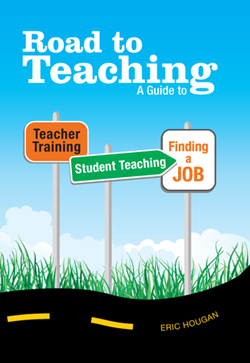
EHougan_COVER_fnl_outlineMany (many, many) years ago, I did my student teaching at my old high school with my old high school English teacher. I was even placed in the same room where I passed notes to my friends and tried not to fall asleep during first period. On the first day of my internship, my advisor/former teacher gave me a few tips and then retired to the staff room, leaving me on my own to teach a room full of teenagers. It was a baptism by fire and I made plenty of mistakes. I wouldn’t recommend it, but luckily it worked out OK in the end. I had a wonderful student teaching experience that made me determined to pursue a teaching career.

Many years later, the tables turned and I was the (semi) experienced teacher assigned my very first student teacher. I was excited to get her because I had a challenging class that year. I thought two adults in the room would be better than one. Unfortunately, it was not a good experience. My student teacher was overwhelmed with part-time work and family responsibilities and was argumentative about anything that required work on her part. Looking back on it, there are lots of things I could have done differently. Here are some of the things I wish I had said.

10. I have no doubt that you had a great education but you don’t know everything just yet. Listen to other teachers, talk to them about what you’re doing, take advice gracefully. You don’t have to do everything that is suggested, but do understand that experience does count for something.

9. Learn everyone’s name, not just your students (although you should know theirs as soon as possible). Talk to the ladies in the cafeteria and the man who cleans your classroom. Make a point to check in with the principal and vice-principal when you have some free time and see how you can help. This will go a long way towards getting you some work as a substitute teacher once you graduate.

8. Treat everyone with equal respect, no matter how old or young they are. I have taught students from 5-50+ and I generally don’t change the way I deal with them. Of course, you use different words depending on their age and understanding, but children deserve to be treated with the same respect as adults. For godsake, never use baby-talk. You aren’t their grandmother, you’re their teacher. I don’t care how cute little Suzy looks in her new dress, she’s not a baby being passed around at a baby shower. She needs you to treat her like a learner, not a doll.

7. Be prepared! In fact, be over prepared. I can’t stress this enough. The quickest way to lose the attention of your class is to be scrambling around trying to find your notes or to upload something on to the overhead projector. The minute they see that you’re weak, you’ve lost them and it’s really hard to get them back.

6. Understand that your students will all be working at different levels of ability. Make sure you read and understand their individual adaptations and program plans. Take special care to spend time with the special needs students in your room who have their own teacher’s aide. Some of your sweetest experiences may be with these kids; don’t miss out on that opportunity. Remember: you are responsible for ALL the students in your class.

5. Be prepared to be flexible. There may be an assembly or a fire drill that causes you not to get something covered that you were hoping to get done. Or you may think you are going to get through a math concept in one day only to discover it’s going to take a lot longer than that. Remember: you’re teaching to the children in front of you, not the lesson plan on your desk. It’s a map but the children are your compass. They will tell you what needs more or less attention. Watch them carefully.

4. Get to know your students. Talk to them. Ask your cooperating teacher if you can head up a current events conversation a few times a week. See who plays sports and who plays an instrument. Find out who got a new cat and whose grandmother just died. Even if you’re not on duty, go outside at recess and see what your students are up to. Take a walk through the cafeteria at lunchtime and see who is eating alone and who is stealing treats from someone else’s lunch. Some kids are very different in social situations than they are in a classroom. It helps to know them when you are trying to teach them.

3. Spend some time getting to know the specialists in your school. Talk to the resource teachers, learning centre specialists, school psychologist and speech therapists. It’s important that teachers work as part of a team. Some kids require a whole village of support in order to be successful. You might also find that you are interested in pursuing a career outside of teaching but still within the school system. Teaching doesn’t have to be a 30-year-career. There are lots of opportunities out there.

2. Cooperate with your cooperating teacher. There is nothing worse for a cooperating teacher than having a difficult student teacher. It’s like having an extra student. Yes, we know you don’t get paid. And yes, we understand you may have a part-time job or a family or a dog that needs to be walked. But you’ve taken on this responsibility and you need to take it seriously.

1. Finally, take some time to reflect on whether or not you actually like what you’re doing. You may discover that it’s not what you expected. Perhaps this ISN’T how you want to spend the next 20-30 years of your life. And that’s OK. Finish your degree and look for something else. It’s better than spending your life doing something you don’t enjoy. But if you do LOVE it, grit your teeth and work your butt off for free. Someday, karma will reward you.

Rants, Teacher

Dear Mr. Lapierre, VP of the NRA – I’m a teacher…so, where’s my gun?

A fourth grade teacher receives firearms training in West Valley City, Utah. (Rick Bowmer/Associated Press)

Hi, Wayne…may I call you Wayne? You don’t know me, but I’m a teacher. And I gotta tell you, you’re starting to scare me.I know you have the best of intentions. Like all of us, you don’t want to see anymore children killed because some lunatic with a gun was able to get into a school and go on a rampage. So far, I’m with you. And I even agree that some schools would benefit from having a trained police officer in their school. Some of the high schools in my area have one and it’s great. They offer all kinds of services besides standing armed guard.

Where you lose me is when you suggest that perhaps school personnel ought to be armed.

When I was a kid, my father hunted and he kept two shotguns on the floor of his bedroom closet. My brother and I knew they were there and we also knew where he kept the ammunition (in his sock drawer). We also knew that if we went anywhere near the guns, we wouldn’t be able to sit down for a week. And so we didn’t. To be honest, they scared me to death. My dad tried to teach me how to shoot. The first (and only) time I fired off a gun, I just missed hitting one of my grandparent’s cows.

So seriously, Wayne, no one wants to see me with a gun. No amount of training in the world is going to turn me into a sharpshooter. I know you would offer to give me training and such, but really, it’s all I can do to keep up with the new math curriculum.

And even if I wanted one, I can’t imagine that my school board would allow me to keep a gun in my desk. For gawds sake, I’m not allowed to use Lysol wipes to clean the children’s desks because of the chemicals. Liquid Paper is a no-no because someone might try to sniff it. Even plastic knives in lunchboxes are taboo, because someone might accidentally cut their finger or god forbid, wave it around near another child.

Finally, I have no idea where I would keep a gun in my classroom. My desk is overflowing and my cabinets are full. I’d have to keep it well hidden, because these kids are like monkeys! They can get their hands on anything and I sure as hell don’t want them getting a hold of a loaded weapon. These kids are experts at Call of Duty IV.

I know you’ve offered to put one of your 4 million NRA members in our school and I thank you for your generous offer. But, no offense or anything, how do I know one of your well-armed men or women isn’t a raging lunatic under the surface? I mean, really…do you know ALL 4 million of these people personally?

There are crazy people everywhere who look and act just like you and me. Giving one of them a gun and inviting them into my school just doesn’t seem like a good idea.

So, thanks, Wayne, but I’ll pass. I’ll pass on the gun, just like I’ll pass on the bunker in case of a nuclear attack and the body armor to protect myself from a zombie apocalypse. Instead, I’ll support stricter gun control laws and increased mental health services. That should help keep the crazies out of my school and let me get back to my real job of teaching.

Rants, Raves, Teacher

Ensuring Good to Great-Teaching 21st century kids in a 21st century world

Quick: what’s the first rule of Fight Club? Remember the 1999 movie starring Brad Pitt where he takes his shirt off a lot and fights other buff guys in basements and parking lots? (OK, stop thinking about that now. Focus. Back to me.) So, the first rule of Fight Club?  You do not talk about Fight Club. The second rule of Fight Club is: you DO NOT talk about Fight Club.

Being part of the teacher’s union is sort of like being part of Fight Club (minus the hot guys with their shirts off – that may happen in some places but sadly, never where I’ve worked).  As a teacher, I do my job and I don’t talk about what my union is doing, at least not in a non-positive, super-supportive way. Now don’t get me wrong. I appreciate everything my union has done for me. God knows, if I had to teach and negotiate my own contract, I would have left long ago. They allow me to do my job; however, just as there are things I could do better as a teacher, I think there are things my union could do better as well.

Across North America we are seeing teacher unions decimated by their government leaders and demonized in the court of public opinion. In order to balance budgets and leave no child behind, governments have slowly but surely worked to take power and control away from the unions and put it into the hands of administrators. In response, many unions have retaliated by threatening to strike, only to have that option legislated away. When they use the only other means available to them, their actual work with children, they find themselves attacked by parents and the press. Teachers are only in the profession for the money, the benefits and the summers off! It seems like teachers and their unions just can’t win.

So, where do we go from here?

While researching teacher unions in the 21st century, I came across an interview with Randi Weingarten, president of the American Federation of Teachers.  Ms. Weingarten, whose union represents more than 1.5 million teachers across the United States, was a key speaker at the Aspen Ideas Festival this summer. Her presentation Can Teacher Unions be Partners in Reforming Schools in the 21st century? focused on what teacher unions need to do better in this ever-changing world.

She admitted that unions, hers in particular, haven’t always put quality teaching at the forefront.

“We…were wrong. Not that we meant to be wrong but our job initially was about fairness, not about quality. Our goal was to make sure teachers and our other members were treated fairly. Our job has to be about quality as well. Due process has to be about fairness, not about job security for life. Not about being used as an excuse for managers not to manage or a cloak for incompetence.”

She said it’s not enough for some teachers to be great.

“What we have to do is ensure good to great for all teachers.”

In response to questions posed by Walter Isaacson, President and CEO of the Aspen Institute, Ms. Weingarten touched on a variety of subjects, including the controversial “bar exam for teachers”, but her focus always went back to making teachers accountable.

“We need to have real evaluation systems that can assess whether teachers are doing their jobs. And if they’re not, you help them. If they’re not, they shouldn’t be teachers.”

“What we have seen is that schools that work…have collaborative environments where there’s a real thoughtful process for how you recruit, support, retain and yes, dismiss, teachers.”

So, how do we make certain that our children are getting the teachers they deserve?

First, she said, we need to ensure that teachers have the tools and conditions they need in order to teach properly.

“You can’t give new teachers a rigorous kind of methodology to teach and then basically say, ‘You’re on your own.’ It’s not fair to the kids and it’s not fair to the teachers.”

Then, she said, teachers need to ask themselves: Did I teach the material? And most importantly: Did the students learn it? This is where standardized testing has a role to play. Sometimes a teacher can present a lesson and feel that it was the best lesson she has ever taught, only to discover that the majority of students didn’t really understand.

Ms. Weingarten was quick to point out that while standardized tests serve a purpose, they should not become the end goal.

“You have to look at the data to see if kids get it,” she told the audience. “You have to have enough data so that people concentrate on it, but when it becomes predominant then education becomes about testing and not about teaching and frankly the current generation of tests have no connection with what we have to teach kids right now. [They] are about the memorization of facts as opposed to about how kids critically think.”

If the jobs of tomorrow require critical thinking and creativity, why are we still teaching kids to memorize facts and then regurgitate them on a series of standardized tests? According to Ms.Weingarten, this focus on testing is one of the most serious problems facing education today.

Teachers need to be trained to teach critically, she said. New teachers need to be able to walk into a classroom feeling prepared, as opposed to the ‘sink or swim’ model we have now. Half of all teachers in the United   States leave teaching within the first three to five years, she pointed out.

“Love is important. You have to love kids to be a school teacher. You have to know your content. And you have to have a pedagogical bag of tricks so that you can differentiate instruction.”

This ability to offer differentiated teaching is what makes teachers great, she said.

“It’s how we go to our toolkit and understand that Walter is different than Randi, that Celia is different than Michael. [It’s] how we actually engage with kids to try to create that seminal moment of learning.”

At the end of her presentation, she went back to her initial question: can teacher unions be a part of educational reform in the 21st century?

“If we actually want to help all kids, the union needs to be a partner in this,” she said. “At the end of the day, if we don’t start focusing on…how we are solution-driven, how we problem solve, how we ensure that all kids get what they need in the public space instead of this constant polarization, education is not going to get better.”

And that’s the goal, isn’t it? To continue to improve education so that it meets the needs of all children? Having unions and governments, parents and teachers, all at each other’s throats does nothing to help students. We need to work together to figure out how best to teach 21st century kids in the 21st century.

So, I’m doing it. I’m breaking Rules #1 and #2 and I’m talking about my union (albeit anonymously and with loads of trepidation). I am grateful for everything they do but I want to make sure the voices of students are heard above all else. In the long run, I think it’s the best thing for me, as a teacher and a parent, and for our planet as a whole.

___________________________________________________________________

Presentation at the Aspen Ideas Festival, June 30, 2012 – “Can Teacher Unions be Partners in reforming schools in the 21st century?” Link to complete video of presentation: http://www.aspenideas.org/session/can-teacher-unions-be-partners-reforming-schools-21st-century